Straight teeth are one of those things that feel like they shouldn’t cost as much as a used car. But in Switzerland, orthodontic treatment, whether it’s Invisalign or traditional braces, is a serious financial commitment. And because it’s often classified as cosmetic for adults, you’re usually paying for it yourself.
I’ve spent time researching this properly, talking to dentists, comparing clinic quotes, and going through the process first-hand with one of my own kids who’s currently on Invisalign, so you don’t have to piece it together from a dozen different sources.
What Invisalign costs in Switzerland
Invisalign pricing depends on how complex your case is. The system comes in several tiers, and your orthodontist will recommend the one that matches the amount of tooth movement needed.
Invisalign Express / Lite — for minor corrections like slight crowding or small gaps. Typically CHF 2,000–3,500. Treatment lasts around 3–6 months.
Invisalign Comprehensive — the full treatment for moderate to complex cases. This is what most adults end up with. Typically CHF 4,500–9,500, with treatment lasting 6–18 months.
Invisalign Teen — essentially the same as Comprehensive but with features designed for teenagers, like compliance indicators and replacement aligners for lost trays. Similar pricing to Comprehensive.
These prices usually include the initial consultation, 3D scanning, all aligner sets, and follow-up appointments. But not always — some clinics charge the consultation separately (CHF 100–200), and retainers at the end of treatment may also be extra (CHF 300–600). Always confirm exactly what’s included in the quote.
What makes Invisalign different from other aligners
Invisalign isn’t the only clear aligner on the market anymore. But it remains the most widely used system in Swiss orthodontic practices, and there are real reasons for that.
25+ years of clinical data. Invisalign has treated over 21 million patients globally. That’s a massive dataset that feeds into their treatment planning algorithms. Newer competitors simply don’t have that volume of clinical evidence behind them.
SmartTrack material. Invisalign’s proprietary aligner material is designed to apply more consistent, gentle force than standard aligner plastics. It’s also more flexible, which means better comfort and a more precise fit.
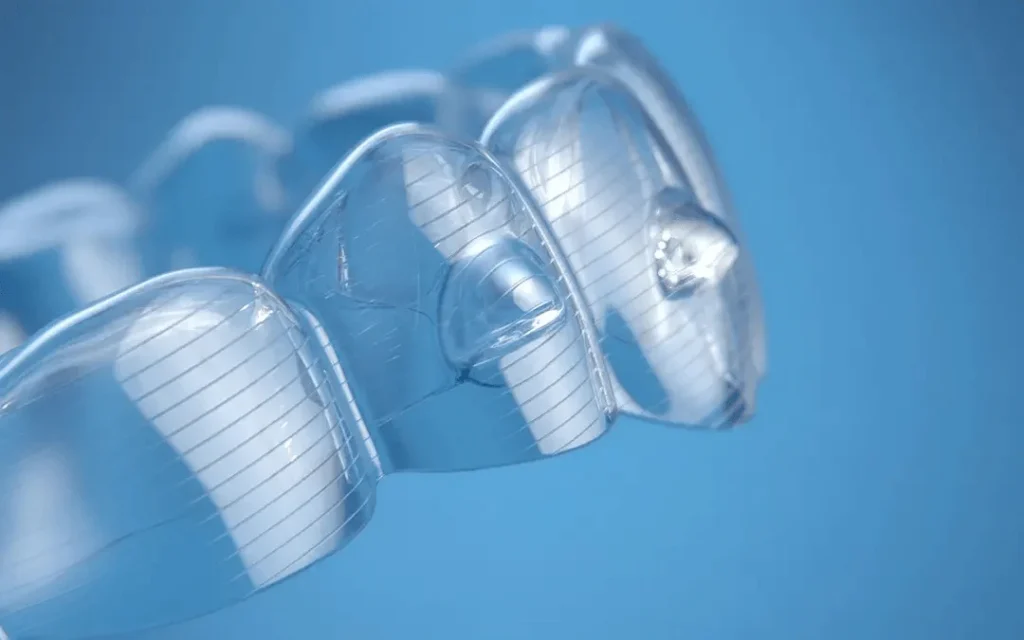
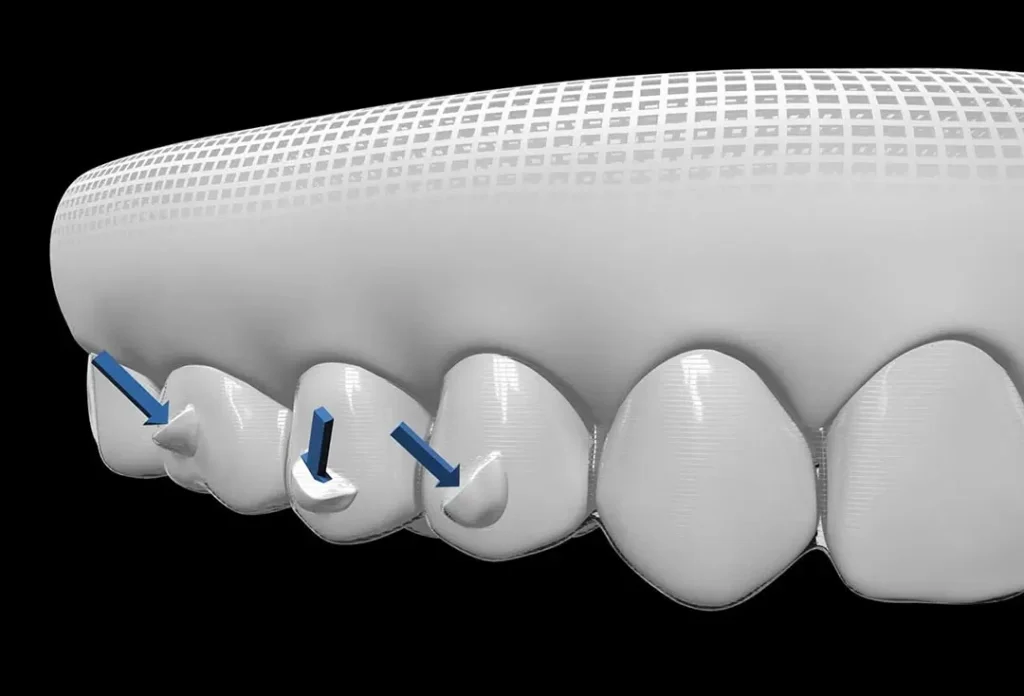
SmartForce attachments. These are small tooth-coloured bumps bonded to specific teeth that give the aligners something to grip. They enable movements — like rotating a tooth or moving a root — that basic clear aligners can’t achieve reliably. This is the biggest technical differentiator between Invisalign and cheaper alternatives.
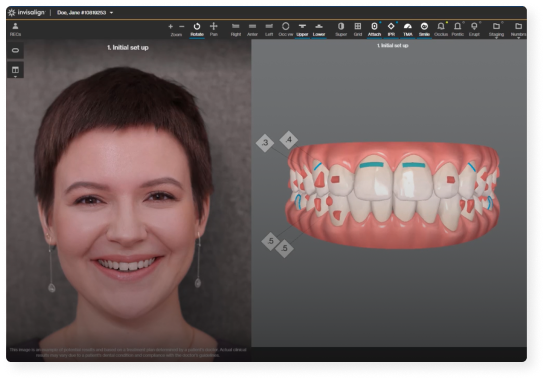
ClinCheck 3D treatment planning. Before treatment starts, your orthodontist creates a detailed 3D simulation of exactly how your teeth will move at each stage. You can preview your final result before committing. Most competitors offer some version of this now, but Invisalign’s system is the most refined.
The important caveat: all of this only matters if your treatment is supervised by a qualified orthodontist or experienced dentist. Invisalign is a tool — the skill of the person using it determines the result.
The alternatives available in Switzerland
ClearCorrect
ClearCorrect is the most common in-office alternative to Invisalign in Switzerland. It uses a similar approach: custom clear aligners, 3D planning, regular orthodontist visits, but typically at a lower price point. Expect CHF 3,500–7,000 depending on the complexity. ClearCorrect works well for mild to moderate cases but has less clinical data than Invisalign for complex treatments.
Spark Aligners
Spark is a newer entrant that’s gaining traction with Swiss orthodontists. Its aligners are made from TruGEN material, which the company claims is clearer, more stain-resistant, and more comfortable than standard aligner plastics. Pricing is similar to Invisalign. Spark is a solid option if your orthodontist offers it and has experience with the system.
Traditional metal braces
Still the gold standard for complex cases. Metal braces can correct severe misalignments, significant bite problems, and rotations that clear aligners struggle with. In Switzerland, traditional braces typically cost CHF 5,000–12,000 for a full treatment. They’re less discreet, but for complex cases, they’re often more effective and sometimes cheaper than Invisalign Comprehensive.
Ceramic (tooth-coloured) braces
Same mechanics as metal braces but with tooth-coloured brackets that are less visible. They cost slightly more — CHF 6,000–14,000 — and the brackets can stain if you’re not careful. A reasonable middle ground between visibility and effectiveness.
Lingual braces
Fitted to the back of your teeth, making them completely invisible from the front. They’re the most expensive option (CHF 8,000–15,000+), can be uncomfortable initially, and require a specialist to fit them. Available at some Swiss clinics but not widely offered.
A cautionary note about direct-to-consumer aligners
You may have seen ads for companies offering clear aligners at a fraction of the cost, sometimes CHF 2,000 or less for a full treatment, often managed remotely with minimal in-person oversight. Some of these have operated in Switzerland.
The most notable example was Bestsmile, a Swiss startup that offered aligners and veneers at competitive prices. Bestsmile was acquired by Migros in 2022, but closed its locations in early 2025 after failing to meet business targets. Former patients were transferred to zahnarztzentrum.ch and other partner clinics to continue their treatments. The Trustpilot reviews tell a sobering story, many patients reported poor results, premature termination of treatment, and difficulty getting refunds.
The lesson here isn’t that all affordable aligners are bad. It’s that orthodontic treatment involves moving bones inside your jaw, and that really should be supervised in person by someone with proper training. At-home or remote-only aligner services skip the X-rays, in-person assessments, and ongoing monitoring that catch problems before they become permanent.
How to pay for Invisalign in Switzerland
Now the part that matters most: financing.
Insurance
Basic insurance (LAMal): Does not cover orthodontic treatment for adults. Period.
Supplementary dental insurance: This is where there’s potential — but only if you play it right.
For adults, most supplementary plans classify orthodontics as cosmetic and exclude it. However, if your orthodontist documents a functional reason for treatment — malocclusion causing jaw pain (TMJ dysfunction), uneven tooth wear, or difficulty maintaining oral hygiene due to crowding — some insurers will cover 50–75% up to their annual cap.
SWICA’s Denta plan covers orthodontics up to age 25 at double the insured amount — so on Category 4, that’s up to CHF 4,000 per year. If you’re under 25 or have kids approaching orthodontic age, this is significant.
CSS covers orthodontics under Options 3 and 4 (but not Options 1 and 2).
The critical point: you need to have the insurance in place before the orthodontist diagnoses the problem. Once a treatment plan exists, it’s a pre-existing condition and won’t be covered. Get insured while your teeth are still “officially” fine.
For children and teens, supplementary dental insurance is almost always worth it for orthodontic coverage. Premiums are low (CHF 10–15/month), and the potential reimbursement for braces or Invisalign can run into thousands. Sign up before age five to avoid the dental exam requirement.
Clinic payment plans
Most orthodontic practices in Switzerland offer interest-free instalments. A CHF 6,500 Invisalign Comprehensive treatment spread over 24 months comes to about CHF 270/month. Some clinics offer a discount (5–10%) for upfront payment in full. Always ask — it’s standard practice but not always advertised.
Tax deductions
Orthodontic treatment is tax-deductible if your dentist documents a functional (not purely cosmetic) reason. The same rules apply as for other medical expenses: you can deduct the amount exceeding 5% of your net income in most cantons. If you’re combining Invisalign with other dental work in the same year, the total may push you over the threshold. See my full post on tax deductions for the cantonal breakdown.
Get multiple quotes
Invisalign pricing varies between clinics more than you’d expect. A Comprehensive treatment quoted at CHF 9,000 at one practice might be CHF 6,000 at another, for the same system, the same aligners, manufactured by the same company. The difference comes down to the clinic’s point value, overhead, and how they price the orthodontist’s time.
Get at least two quotes. Make sure each one specifies whether the consultation, retainers, and refinement aligners are included.
How to choose an Invisalign provider
Not every dentist who offers Invisalign is equally experienced with it. Here’s what to look for:
Ask about their Invisalign tier. Align Technology (the maker of Invisalign) ranks providers by how many cases they treat annually: Bronze, Silver, Gold, Platinum, Diamond. A higher tier means more experience — and with orthodontics, experience matters.
Ask to see cases similar to yours. Before-and-after photos of actual patients, ideally with a similar starting position to yours.
Check whether they’re an orthodontist or a general dentist. Both can offer Invisalign, but an orthodontist has 3+ years of additional specialist training in tooth movement. For complex cases, that expertise is worth paying for.
Ask about refinements. Sometimes the initial set of aligners doesn’t achieve the full result, and additional aligners (refinements) are needed. Confirm whether refinements are included in your price or charged separately.
Ready to find an Invisalign provider? Search on ConnectADoc.
Frequently asked questions
How much does Invisalign cost in Switzerland? Between CHF 2,000 and CHF 9,500 depending on the complexity of your case. Minor corrections (Invisalign Express/Lite) start from CHF 2,000–3,500. Full treatment (Invisalign Comprehensive) typically costs CHF 4,500–9,500.
Is Invisalign covered by insurance in Switzerland? Not by basic insurance. Some supplementary dental plans cover orthodontics if the treatment is functionally justified (jaw pain, bite problems, hygiene issues due to crowding). SWICA covers orthodontics up to age 25 at double the insured amount. Get insured before you need it — pre-existing conditions are excluded.
What is the cheapest alternative to Invisalign in Switzerland? ClearCorrect is the most common lower-cost in-office alternative, typically CHF 3,500–7,000. Traditional metal braces (CHF 5,000–12,000) can also be cheaper than Invisalign Comprehensive for complex cases. Avoid remote-only aligner services without proper in-person supervision.
Is Invisalign better than braces? For mild to moderate cases, Invisalign offers comparable results with more discretion and comfort. For complex cases: severe crowding, significant bite issues, major rotations, traditional braces may be more effective. Your orthodontist can advise which is best for your specific situation.
Can adults get Invisalign in Switzerland? Yes, there’s no age limit. Adults make up a significant portion of Invisalign patients. The main consideration for adults is that insurance coverage is much more limited than for children and teens.
Are Invisalign costs tax-deductible in Switzerland? Yes, if the treatment is documented as medically necessary (not purely cosmetic). The usual cantonal thresholds apply, typically 5% of net income in most cantons. Keep your orthodontist’s treatment justification and all invoices for your tax return.
Leave a Reply