Author: David

  • Best Toothbrush for Braces in Switzerland: What My Orthodontist Actually Told Us to Buy

    Best Toothbrush for Braces in Switzerland: What My Orthodontist Actually Told Us to Buy

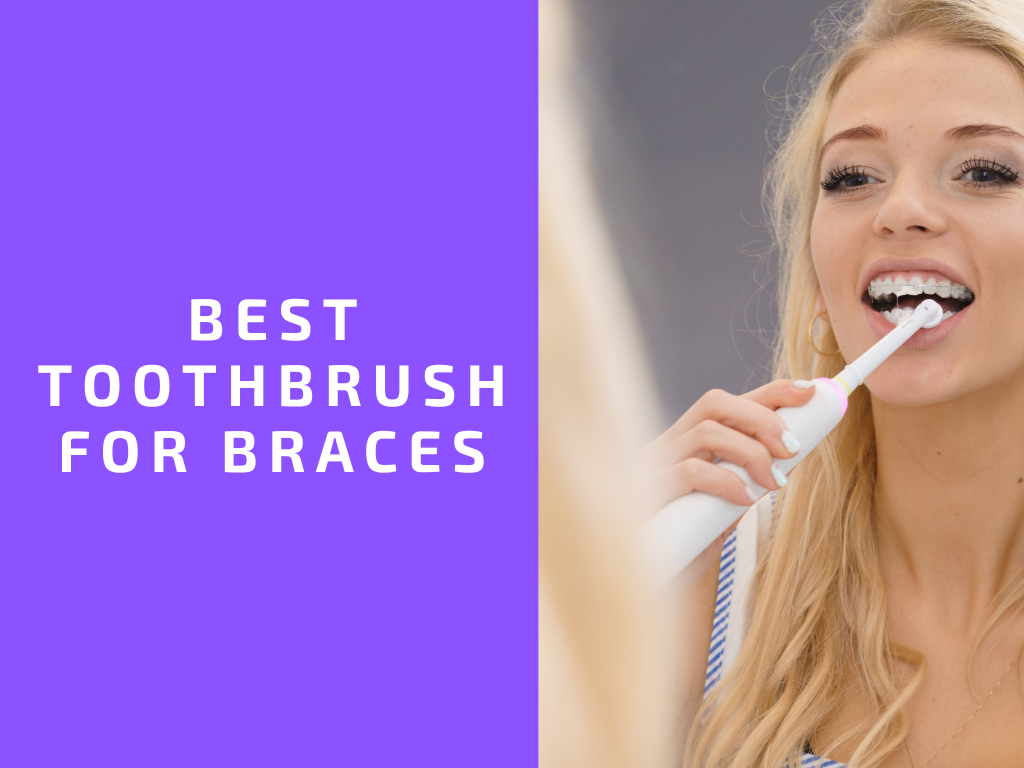
    When one of my kids started orthodontic treatment, the orthodontist handed us a very specific shopping list. Not just “buy a soft toothbrush” — they were precise about which brush, which interdental tools, and how to use them around brackets and wires. It turns out that oral hygiene with braces isn’t just about brushing more carefully. You need different tools entirely.

    I’m sharing what we were told, what we’ve been using, and what’s actually worked — because if you’re spending CHF 5,000–10,000 on braces in Switzerland, the last thing you want is cavities or white spots forming underneath the brackets because you were using the wrong brush.

    Why normal toothbrushes don’t work with braces

    A standard toothbrush — even a good one — can’t properly clean around orthodontic brackets and wires. The brackets create tiny shelves above and below them where food and plaque accumulate, and the wire connecting them blocks the bristles from reaching the tooth surface in between. If that plaque isn’t removed daily, you get decalcification (those chalky white spots that appear on teeth after braces come off), cavities, and inflamed gums.

    This is why orthodontists in Switzerland are specific about the tools they recommend. It’s not upselling — it’s because the wrong brush literally undermines the treatment you’re paying thousands of francs for.

    The brushes Swiss orthodontists recommend

    The daily brush: Curaprox CS 5460 Ortho

    This is what our orthodontist recommended, and it’s the one you’ll hear mentioned most often in Swiss practices. It’s the orthodontic version of the standard Curaprox CS 5460 — same 5,460 ultra-soft Curen filaments, same compact head, but with a V-shaped groove cut into the centre of the bristles.

    That groove is the key feature. It wraps around the brackets and wire, allowing the bristles on either side to clean above and below the bracket simultaneously. You brush along the wire in gentle circular motions, and the V-trim does the work of getting into the spaces that a flat brush head misses completely.

    It costs about CHF 7–8 (same as the regular CS 5460) and should be replaced every two to three months — braces wear bristles down faster than usual.

    Why this and not a regular soft brush? We tried using a standard Curaprox CS 5460 at first, thinking it would be fine since it’s already ultra-soft. It wasn’t. The flat bristle profile just slides over the top of brackets without properly cleaning around them. The Ortho version made an immediately noticeable difference.

    The precision brush: Curaprox CS 1006 or CS 1009 Single

    This is the tool that most people don’t know about until their orthodontist shows them. It’s a single-tuft brush — essentially a tiny, pointed cluster of bristles on a handle. You use it to clean along the gumline above the brackets, around individual brackets, and in any spot where the main brush can’t reach.

    Think of it as a detail brush. The main ortho toothbrush does the general cleaning; the single-tuft brush does the precision work. It takes an extra minute or two, but our orthodontist was emphatic: “This is what prevents the problems I see in patients who only use a regular brush.”

    It costs about CHF 5–6 and lasts around two months.

    The wire cleaners: Curaprox CPS Interdental Brushes

    Interdental brushes are essential with braces — arguably more important than floss, which is extremely difficult to use with fixed brackets anyway. These small, cone-shaped brushes slide under the wire and between the brackets to remove food and plaque from the spaces between teeth.

    Curaprox makes a range of sizes (colour-coded), and your orthodontist or hygienist will tell you which sizes fit your gaps. For braces, the CPS 14 (cone-shaped) and CPS 18 are specifically designed to fit under orthodontic wires.

    A pack of five costs CHF 7.50–9.50. They last about a week each with daily use, so budget for roughly CHF 8–10 per month.

    The travel kit: Curaprox Ortho Travel Set

    If your kid is at school or travelling, Curaprox makes an ortho-specific travel set that includes a compact ortho toothbrush (with replaceable heads), interdental brushes, and a small toothpaste. It’s about CHF 25 and surprisingly well thought out — my kid keeps one in their school bag.

    What about electric toothbrushes?

    Electric toothbrushes can work with braces, but with caveats. An oscillating head (like Oral-B’s round-head models) needs to be used carefully — the rotating motion can catch on wires if you’re not paying attention. Sonic toothbrushes (like the Curaprox Hydrosonic or Philips Sonicare) are generally safer because the vibration is linear, not rotational, so there’s less risk of snagging.

    That said, our orthodontist’s advice was straightforward: “A manual Curaprox Ortho with proper technique is better than an electric brush with lazy technique.” The tool matters less than the discipline of spending three to four minutes, twice a day, methodically cleaning around every bracket.

    If your child prefers electric, look for a model with a sensitive or ortho mode that reduces power, and use a small brush head.

    What about Invisalign?

    If your child is on Invisalign rather than fixed braces, the brushing situation is simpler. Because the aligners are removable, you brush your teeth normally — no brackets or wires to navigate. A standard Curaprox CS 5460 works perfectly.

    The additional task is cleaning the aligners themselves. Rinse them every time you remove them, brush them gently with a soft brush (a separate one, not your tooth brush), and avoid hot water (it warps the plastic). Curaprox makes an Aligner Foam that’s designed for this, though warm water and a gentle brush works fine for daily cleaning.

    The cost of keeping teeth clean with braces

    Let’s add it up, because this is ConnectADoc and everything comes back to money:

    Monthly cost of the full braces hygiene kit:

    • Curaprox CS 5460 Ortho (replace every 2–3 months): ~CHF 3/month
    • Curaprox CS 1006 single-tuft brush (replace every 2 months): ~CHF 3/month
    • Curaprox CPS interdental brushes: ~CHF 8–10/month
    • Elmex or Meridol toothpaste: ~CHF 2/month

    Total: roughly CHF 16–18 per month, or about CHF 200 per year.

    That might sound like a lot for oral hygiene products. But compare it to what happens if hygiene fails during orthodontic treatment: fillings on newly straightened teeth (CHF 200–400 each), treatment for decalcification or white spots, extended treatment time because of gum problems, and in the worst cases, brackets needing to be removed early because of decay underneath.

    One filling costs more than a year’s worth of proper brushing tools. Prevention wins again.

    What to ask your orthodontist

    Every mouth is different, and your orthodontist should give you personalised recommendations at the start of treatment. But here are the questions worth asking:

    “Which specific brush do you recommend for my child’s braces?” — Get the exact product, not just “a soft brush.”

    “Which interdental brush sizes do we need?” — They’ll check the spacing and tell you the right colour-coded sizes.

    “How should we adjust the routine for the first week?” — Gums are often sore after brackets are fitted, and the brushing technique may need to be gentler initially.

    “How often should we come in for a hygiene appointment during treatment?” — Many orthodontists recommend every three to four months rather than the usual six, because plaque builds up faster with braces.

    “Will our supplementary dental insurance cover extra hygiene sessions?” — If your plan covers dental hygiene, check whether more frequent appointments during orthodontic treatment are reimbursed. Some insurers cover this; others cap the number of sessions per year.


    Frequently asked questions

    What is the best toothbrush for braces in Switzerland? The Curaprox CS 5460 Ortho is the most widely recommended by Swiss orthodontists. Its V-shaped bristle groove is specifically designed to clean around brackets and wires. Pair it with a single-tuft brush and interdental brushes for complete cleaning.

    How often should you change your toothbrush with braces? Every two to three months — more frequently than usual, because brackets wear down bristles faster. If the bristles are splaying before the two-month mark, replace it sooner.

    Can you use an electric toothbrush with braces? Yes, but sonic models are generally safer than oscillating ones. Use a sensitive mode and a small brush head. Manual brushing with a specialised ortho brush and proper technique is equally effective.

    How much does it cost to maintain oral hygiene with braces? About CHF 16–18 per month for the full kit (ortho toothbrush, single-tuft brush, interdental brushes, and toothpaste). That’s roughly CHF 200 per year — far less than the cost of treating preventable problems caused by poor hygiene during treatment.

    Are interdental brushes better than floss with braces? Yes, for most people. Flossing with fixed braces requires a threader and takes significantly longer. Interdental brushes slide under the wire and clean between brackets much more efficiently. Your orthodontist can recommend the right sizes.
  • Swiss Toothbrushes and Oral Care: Curaprox, Elmex, Trisa, and Berninox Compared

    Swiss Toothbrushes and Oral Care: Curaprox, Elmex, Trisa, and Berninox Compared

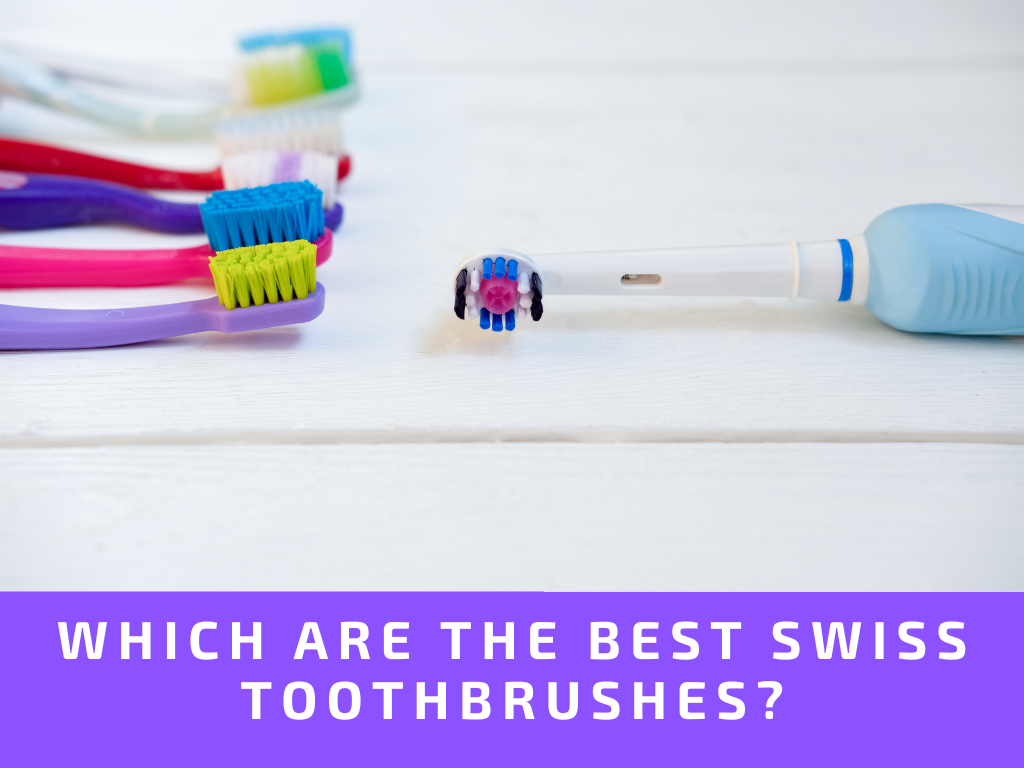
    One of the first things you notice after moving to Switzerland is that even toothbrushes have a premium tier here. Walk into any Coop or Migros and you’ll see the familiar international brands (Oral-B, Colgate, Elmex) alongside two names that are unmistakably Swiss: Curaprox and Trisa.

    Both are made in Switzerland. Both are recommended by Swiss dentists. And both cost more than whatever you were using before. So the obvious question: is a CHF 7 toothbrush actually three times better than a CHF 2 one?

    After several years of using both brands — and after being told by more than one dental hygienist that what I was using before was essentially destroying my gums — here’s my honest take.

    The two Swiss brands you need to know

    Curaprox

    Curaprox is the one your Swiss dentist will almost certainly recommend. Based in Kriens (near Lucerne) and founded in 1972, the company is built around one core idea: softer bristles, packed more densely, clean better and cause less damage.

    Their flagship product is the CS 5460 — the number refers to the bristle count (5,460 ultra-fine filaments on a single brush head). For comparison, a typical supermarket toothbrush has 500–800 bristles. The bristles are made from Curen, a proprietary material that’s softer than nylon but stays firm when wet, meaning it doesn’t lose its shape after a few weeks.

    The result? A brush that removes plaque effectively while being genuinely gentle on gums. If you’ve ever had a hygienist tell you that your gums are receding because you’ve been brushing too hard with a medium-bristle brush, Curaprox is what they’ll point you towards.

    What it costs:

    • CS 5460 single: CHF 6.60–7.50
    • CS 5460 two-pack: CHF 13.95
    • CS 12460 Velvet (12,460 filaments, even softer): CHF 9.50–10.50
    • Curaprox Wood (biodegradable beech handle): CHF 8.50
    • Hydrosonic Easy (sonic electric): CHF 89–109
    • CPS interdental brushes (set of 5): CHF 7.50–9.50

    Replace every three months, so the annual cost for a manual Curaprox is roughly CHF 28–30.

    Curaprox also makes interdental brushes, toothpastes (the Be You and Enzycal ranges), and a sonic toothbrush. The interdental brushes are particularly well-regarded — most Swiss hygienists will recommend them over floss, and they’re genuinely easier to use once you get the hang of them.

    Trisa

    Trisa is the quiet giant of Swiss oral care. Based in Triengen (canton of Lucerne) and operating for over 135 years, Trisa manufactures toothbrushes, interdental brushes, and sonic toothbrushes — all in Switzerland. If Curaprox is the boutique brand your dentist recommends, Trisa is the industrial-scale Swiss manufacturer you’ll find on every supermarket shelf.

    Trisa’s range is broader and generally more affordable than Curaprox. Their toothbrushes use conventional nylon bristles (not Curen) but are well-made, with good bristle rounding (important for gum protection) and practical designs.

    What it costs:

    • Trisa Flexible Head (manual): CHF 3.50–5.00
    • Trisa Pro Interdental (manual, with interdental bristles): CHF 4.00–5.50
    • Trisa Natural Clean (FSC-certified wooden handle): CHF 4.50
    • Trisa Sonic Performance (sonic electric): CHF 39–59
    • Trisa interdental brushes (PaperCare, 10 pack): CHF 4.90

    Annual cost for a manual Trisa: roughly CHF 16–22.

    Trisa has leaned heavily into sustainability — their PaperCare interdental brushes use FSC-certified paper handles instead of plastic, and their wooden toothbrushes are fully biodegradable. For the environmentally conscious, this is a meaningful differentiator.

    Berninox

    Berninox is the newest entrant — a Swiss startup based in Neuchâtel that’s taken a completely different approach to the toothbrush. Instead of a disposable plastic handle, Berninox uses a permanent handle made from 316L surgical stainless steel (the same hypoallergenic alloy used in medical implants). You keep the handle for life and replace only the clip-on brush head every three months. The heads are made from recycled ocean-bound plastic in partnership with #tide ocean material, a Swiss recycling firm.

    The brushing quality is genuinely good — the heads are developed with dental professionals and come in super soft, soft, and medium bristle options. The whole thing is dishwasher-safe and steam-sterilisable, which makes it more hygienic than any plastic or wooden handle. It’s also a beautiful object — the kind of toothbrush you’d actually want sitting on your bathroom shelf.

    What it costs:

    • Starter pack (handle + 3 heads): CHF 45.80
    • Refill heads (3-pack): CHF 12.90
    • Handle only: CHF 32.90

    The upfront cost is significantly higher than Curaprox or Trisa. But because you only replace the heads (CHF 12.90 per quarter = CHF 51.60/year), the ongoing annual cost is comparable after the first year. Over five years, a Berninox works out to roughly CHF 14/year for the handle plus CHF 51.60/year for heads — about CHF 65/year total. Not cheap, but not dramatically more than a Curaprox habit, and you’re producing a fraction of the plastic waste.

    If sustainability is your priority and you don’t mind the upfront investment, Berninox is the most environmentally serious option on this list — and it’s 100% designed and manufactured in Switzerland.

    Elmex and Meridol

    You’ll see these two brands everywhere in Swiss pharmacies and supermarkets. Elmex and Meridol are both Swiss-born brands, created by GABA International AG — a company rooted in the Goldene Apotheke Basel, one of the oldest pharmacies in Switzerland, founded in 1638. GABA was acquired by Colgate-Palmolive in 2004, and production has since moved to Poland, so they’re no longer manufactured in Switzerland. But they were developed here, the formulations came out of research at the University of Zurich, and they remain the go-to recommendation from Swiss dental professionals.

    Elmex is primarily known for its toothpaste, particularly the Caries Protection formula. It uses amine fluoride (olaflur), an organic fluoride developed in Zurich in the 1950s that forms a more durable protective layer on enamel than standard sodium fluoride. Elmex also makes mouthwashes and a children’s range. The classic Swiss advice you’ll hear: “Elmex in the evening” — for overnight cavity protection.

    Meridol focuses on gum health. Its toothpaste and mouthwash use a combination of amine fluoride and stannous fluoride that targets the bacteria responsible for gum inflammation. If your hygienist has ever told you that your gums are inflamed or that you’re showing early signs of gingivitis, Meridol is likely what they’ll suggest.

    What they cost:

    • Elmex Caries Protection toothpaste (75ml): CHF 3.50–4.50
    • Elmex Sensitive Professional (75ml): CHF 6.50–8.00
    • Elmex mouthwash (400ml): CHF 6.00–7.50
    • Meridol toothpaste (75ml): CHF 4.00–5.00
    • Meridol mouthwash (400ml): CHF 6.50–8.00

    These aren’t toothbrushes — Elmex and Meridol do make brushes, but they’re not what they’re known for. Their real value is in the toothpaste and mouthwash, which pair perfectly with a Curaprox or Trisa brush. Think of it this way: Curaprox or Trisa for the tool, Elmex or Meridol for the paste.

    What Swiss dentists actually recommend

    I’ve asked this question to every hygienist and dentist I’ve seen over the years, and the answer is remarkably consistent: soft bristles, small head, and interdental brushes every day.

    The specific brand matters less than the technique and the bristle type. But when pushed for a recommendation, Curaprox wins overwhelmingly among Swiss dental professionals. The reason is the bristle density — 5,460 ultra-fine filaments cover more tooth surface per stroke and are far less likely to cause gum recession than a standard brush with 600 bristles and medium-hard nylon.

    That said, I’ve had one hygienist tell me that Trisa’s Pro Interdental is excellent value for the price, and another say that for children, Trisa’s kids’ range works perfectly well. The consensus isn’t “Curaprox or nothing” — it’s “soft, dense bristles and proper technique.”

    Every single hygienist, without exception, has also recommended interdental brushes over floss. Curaprox’s CPS range is the most commonly mentioned, but Trisa’s paper-handled version works well too and is cheaper.

    The cost/value calculation

    Here’s where my “cost of dental care” brain kicks in. Is spending more on a toothbrush actually a financial investment?

    Annual cost comparison:

    • Budget supermarket toothbrush (replaced quarterly): CHF 8–12/year
    • Trisa manual (replaced quarterly): CHF 16–22/year
    • Curaprox CS 5460 (replaced quarterly): CHF 28–30/year
    • Berninox heads only (replaced quarterly, after initial handle purchase): CHF 52/year
    • Add interdental brushes (Curaprox CPS, monthly): CHF 90–115/year
    • Add interdental brushes (Trisa PaperCare, monthly): CHF 60–70/year
    • Add Elmex or Meridol toothpaste (tube every 2–3 months): CHF 15–25/year
    • Add Elmex or Meridol mouthwash (bottle every 2–3 months): CHF 25–35/year

    So the full “Swiss dentist-approved” daily routine — a Curaprox toothbrush, interdental brushes, and Elmex or Meridol toothpaste and mouthwash — costs roughly CHF 160–205 per year. That’s about CHF 14–17 per month.

    Now compare that to what poor oral hygiene costs:

    • One filling: CHF 200–400
    • One scaling session to deal with heavy tartar: CHF 200+
    • Periodontitis treatment: CHF 1,500+
    • A single crown: CHF 1,500–3,000

    The maths aren’t subtle. An extra CHF 100/year on better brushing tools is trivial compared to a single unplanned dental bill. And if using a softer, denser brush means less gum recession — which means fewer expensive periodontal treatments down the line — it’s not a cost, it’s an investment.

    My hygienist put it simply: “A CHF 7 toothbrush that you use properly is worth more than a CHF 200 cleaning every six months.” She wasn’t saying don’t come for cleanings. She was saying that the patients who invest in good home care need less intervention — and spend less money overall.

    My recommendation

    If you’re going to spend money on one dental upgrade after reading this blog, make it this:

    Switch to a Curaprox CS 5460 (or the three-pack for better value), a set of interdental brushes in the right size for your gaps (your hygienist can tell you which size at your next cleaning), and a tube of Elmex Caries Protection or Meridol toothpaste depending on whether cavities or gum health is your bigger concern. Use the interdental brushes every evening before brushing.

    Total cost to get started: about CHF 25. Annual cost for the full routine: about CHF 160–205.

    If budget is tight, Trisa’s Pro Interdental manual brush plus their PaperCare interdental brushes and a standard Elmex toothpaste will get you 80% of the benefit at roughly half the cost.

    Either way, you’ll be doing what Swiss dentists have been telling their patients for decades — and you’ll almost certainly notice the difference at your next scaling session, when there’s less for the hygienist to scrape off.

    And less scraping means a shorter appointment, which means a smaller bill. See? Even toothbrush advice comes back to money eventually.

    Frequently asked questions

    How often should I change my toothbrush? Every three months, or sooner if the bristles start splaying outwards. After three months, even the best bristles lose their shape and cleaning effectiveness, and bacteria build up in ways that rinsing can’t fix. A simple trick: change your brush at the start of each season (spring, summer, autumn, winter) and you’ll never forget.

    What does it mean when bristles start falling out? It means the brush is past its useful life and you should replace it immediately. Loose bristles can get stuck between teeth or along the gumline, and a brush that’s shedding filaments isn’t cleaning properly anyway. If a new brush starts losing bristles within the first few weeks, that’s a quality issue.

    Soft, medium, or hard — which should I choose? Soft. Always soft. My hygienist has told me this repeatedly, and every dental professional I’ve asked says the same thing. Medium and hard bristles feel like they’re doing more work, but what they’re actually doing is wearing down your enamel and pushing your gums back, damage that’s irreversible. A soft brush with good technique removes plaque just as effectively without the collateral damage. If your dentist or hygienist recommends ultra-soft (like the Curaprox CS 5460), go with that. The only people who might use medium are those specifically advised to by their dentist for a particular reason — and even then, it’s becoming less common.

    How should I store my toothbrush at home? Upright, in open air, and somewhere it can dry completely between uses. This is where most people go wrong. Those closed toothbrush cups and holders without drainage holes are breeding grounds for bacteria and mould. You know that slimy residue that builds up at the bottom of a toothbrush cup? That’s biofilm — a mix of bacteria, mould, and stagnant water. It’s the opposite of hygienic, and your toothbrush is sitting in it twice a day.

    The fix is simple: use a holder with drainage holes at the bottom, or a wall-mounted holder that keeps the brush head exposed to air. Rinse the holder weekly. If you’re using a cup, tip the water out daily and clean it regularly. Berninox has an edge here — the stainless steel handle is dishwasher-safe, so you can sterilise the whole thing periodically.

    How should I store my toothbrush when travelling? Use a ventilated travel case — one with small holes or slots that allow airflow. A completely sealed case traps moisture and creates the perfect environment for bacteria to multiply. Let your brush air-dry as much as possible before putting it in the case, and when you arrive, take it out and stand it upright immediately. Never leave a damp toothbrush sealed in a toiletry bag for days. If you travel frequently, consider keeping a separate travel brush so your main one stays at home in optimal conditions.

    Should I use an electric or manual toothbrush? Either works well if you use proper technique. Electric (sonic) toothbrushes like the Curaprox Hydrosonic or Trisa Sonic Performance can be helpful if you tend to brush too hard (the motor does the work, so you apply less pressure) or if you have limited dexterity. But a manual Curaprox CS 5460 with good technique is just as effective as any electric brush — Swiss hygienists confirm this regularly. It comes down to personal preference and budget.

  • Dental Scaling in Geneva: Everything You Need to Know

    Dental Scaling in Geneva: Everything You Need to Know

    If there’s one dental treatment that genuinely saves you money in the long run, it’s a regular scaling session. Not because it’s cheap — nothing dental is cheap in Geneva — but because the things it prevents (gum disease, cavities, tooth loss, periodontitis) cost ten to a hundred times more to fix.

    Yet most people in Geneva either don’t go often enough, or don’t fully understand what they’re paying for, whether their insurance covers it, or how to get the best value. Let’s fix that.

    What scaling actually is (and what it isn’t)

    Scaling — or détartrage — is a professional deep clean performed by a dental hygienist. It removes the hardened plaque (tartar or calculus) that builds up on and between your teeth over time, including below the gumline where your toothbrush and floss can’t reach. Left untreated, this tartar causes gum inflammation (gingivitis), which progresses to periodontitis — a serious infection that destroys the bone supporting your teeth and is the leading cause of tooth loss in adults.

    A scaling session isn’t the same as a simple polish. A proper hygiene appointment includes removing tartar from all tooth surfaces (including under the gums), checking your gum health, assessing your brushing technique, and sometimes taking X-rays to spot problems early. Good clinics in Geneva use modern Airflow technology (a fine powder spray that removes biofilm and stains more gently than traditional instruments) alongside ultrasonic scalers.

    The whole thing takes 30–60 minutes, depending on how much buildup there is and how long it’s been since your last visit. If you go regularly — every six months is the standard recommendation — sessions are faster and more comfortable. If you’ve left it a year or more, expect a longer and more thorough (and sometimes less comfortable) session.

    What scaling costs in Geneva

    Geneva is one of the more expensive cantons for dental care, and scaling is no exception. Here’s what you can expect to pay:

    Standard hygiene appointment (scaling, polishing, gum check by a dental hygienist, 45–60 minutes): CHF 140–200. The average in Geneva is around CHF 165, based on price surveys of Geneva clinics.

    Hygiene appointment with X-rays (adds two control X-rays for the dentist to review): CHF 170–220.

    Deep scaling (for patients with significant tartar buildup or early gum disease, sometimes requiring two visits): CHF 250–400.

    Some clinics charge a separate fee if the dentist does a brief check after the hygienist session — typically CHF 50–80 for the consultation. Others bundle this into the hygiene price. Always ask upfront what’s included.

    Why prices vary: The cost depends on the clinic’s point value (valeur du point), which in Geneva ranges from CHF 1.00 to CHF 1.20. It also depends on whether the work is done by a fully qualified dental hygienist or by a prophylaxis assistant (a less qualified role that some clinics use to keep costs down). There’s a real difference — dental hygienists undergo three years of specialised training and can work sub-gingivally (below the gumline), which is where the most important tartar removal happens.

    If you’re comparing prices between clinics, ask two questions: What is your point value? And will I be treated by a dental hygienist or a prophylaxis assistant?

    Who pays: insurance and tax

    Let’s go through each option.

    Basic insurance (LAMal): Does not cover scaling or any routine dental hygiene for adults. This catches out many newcomers — especially those arriving from countries where preventive dental care is part of the public system.

    Supplementary dental insurance: This is where scaling gets partially covered — and it’s one of the treatments that makes supplementary insurance worth the premium for adults who go twice a year.

    SWICA’s Denta plan covers dental hygiene at 50–75% depending on the category, up to the annual limit. AXA’s dental insurance explicitly includes dental hygiene with no waiting period — from day one of the policy. CSS, Helsana, and Sanitas all include dental hygiene within their dental insurance plans, subject to the standard reimbursement percentages and annual caps.

    In practical terms: if you’re on a mid-tier supplementary plan that reimburses 75% up to CHF 2,000/year, and your scaling costs CHF 170, you’d get back about CHF 127 per session. Two sessions a year means CHF 254 back. If your premiums are CHF 40/month (CHF 480/year), your two cleanings alone recover more than half the annual premium — and you still have the rest of your limit available for any other dental work.

    This is the basic maths that makes supplementary dental insurance more justifiable for adults than many people realise: if you go for regular cleanings, you’re already recouping a meaningful portion of your premiums before anything unexpected happens.

    Tax deductions: Scaling costs are tax-deductible as medical expenses, but only the portion exceeding 5% of your net income in most cantons. Geneva is an exception — the threshold here is just 0.5% of net income, making it one of the most generous cantons for medical deductions. If your net income is CHF 100,000, you only need CHF 500 in total medical expenses before you can start deducting. Two scaling sessions at CHF 170 each, plus a dental checkup, could push you over that threshold when combined with other medical costs.

    Keep every receipt. Your insurer sends a tax statement in January that summarises what you paid and what was reimbursed — the unreimbursed portion is what you can deduct.

    How often should you go?

    The standard recommendation is every six months. For most people with reasonable oral hygiene, this is sufficient to prevent tartar buildup from causing problems.

    But your hygienist may recommend a different frequency based on your individual situation. People who are prone to tartar buildup, smokers, diabetics, pregnant women, and anyone with a history of gum disease may benefit from going every three to four months. On the other end, someone with excellent oral hygiene and minimal buildup might be fine with once a year — but this is less common than people think.

    The financial case for twice-yearly visits is straightforward: two cleanings at CHF 170 each cost CHF 340 per year. A single filling costs CHF 200–400. A root canal costs CHF 800–2,000. A crown costs CHF 1,500–3,000. Periodontitis treatment can run CHF 1,500+ and requires multiple visits. Prevention is, quite literally, cheaper than cure.

    How to get the best value in Geneva

    Compare point values. A clinic with a point value of CHF 1.00 will charge noticeably less than one at CHF 1.20 for exactly the same treatment. In Geneva, some clinics — particularly those with an accessibility mission — deliberately keep their point value at CHF 1.00.

    Ask about combo packages. Many Geneva clinics offer discounted packages that combine scaling with a checkup or scaling with whitening. If you were going to do both anyway, the bundle can save you CHF 50–100.

    Check if your broader supplementary insurance includes dental. Some supplementary health insurance packages (like SWICA’s Completa Top) include a small annual contribution towards dental hygiene — CHF 100/year — even without a separate dental plan. You might already have partial coverage and not know it.

    Use your insurance strategically. If you have supplementary dental insurance with an annual cap, schedule your two cleanings in the same calendar year as any other planned dental work. This maximises your reimbursement for the year.

    Don’t skip appointments to save money. This is the biggest false economy in dental care. The CHF 170 you “save” by skipping a cleaning can easily become CHF 2,000 in treatment costs when a preventable cavity or gum problem progresses. Every dentist and hygienist I’ve spoken to in Geneva says the same thing: the patients who cost themselves the most are the ones who come once every two years instead of twice a year.

    Finding a dental hygienist in Geneva

    In Geneva, you can book scaling either through a dental clinic (where the hygienist works alongside the dentist) or at a standalone dental hygiene clinic. Both are perfectly fine — the important thing is that the person doing the work is a qualified dental hygienist, not a prophylaxis assistant.

    Some well-known options in Geneva include the Clinique d’Hygiène Dentaire (CHD) on Rue F. Versonnex, which is specifically focused on hygiene and keeps prices competitive, and the Centre Dentaire Champel, which uses a lower point value for hygiene than for dental care. But there are many good hygienists across the canton — the best way to find one near you is through a recommendation or through ConnectADoc.


    Frequently asked questions

    How much does dental scaling cost in Geneva? A standard scaling session with a dental hygienist in Geneva costs between CHF 140 and CHF 200, with the average around CHF 165. Adding X-rays and a dentist checkup brings the total to CHF 170–220.

    Is scaling covered by Swiss insurance? Not by basic insurance (LAMal). Supplementary dental insurance from providers like SWICA, AXA, CSS, and Helsana typically reimburses 50–75% of scaling costs, up to the annual limit. AXA covers dental hygiene from day one with no waiting period.

    How often should I get scaling done? Every six months is the standard recommendation. Your hygienist may suggest more frequently (every 3–4 months) if you have gum disease, heavy tartar buildup, or other risk factors.

    Is dental scaling tax-deductible in Geneva? Yes. Geneva has one of the lowest thresholds in Switzerland — just 0.5% of net income. The unreimbursed portion of your scaling costs (what insurance didn’t cover) can be deducted as a medical expense on your tax return.

    What’s the difference between a dental hygienist and a prophylaxis assistant? A dental hygienist has three years of specialised training and can perform sub-gingival scaling (below the gumline). A prophylaxis assistant has less training and is limited to simpler cleaning procedures. For thorough preventive care, always check that you’re being treated by a qualified hygienist.

  • Teeth Whitening in Geneva: Options, Results, and What It Actually Costs

    Teeth Whitening in Geneva: Options, Results, and What It Actually Costs

    Teeth whitening is one of the most requested cosmetic dental treatments in Geneva, and it is easy to see why. A visibly brighter smile takes one appointment and produces results that are immediately noticeable. With prices ranging from CHF 299 to CHF 750 depending on the method, and a crowded market of clinics all promising the same outcome, knowing what you are actually paying for matters.

    This guide covers everything you need to make an informed decision: the treatment options available in Geneva, what results you can realistically expect, the full cost breakdown, and what to look for when choosing a dentist.

    Key takeaway: Professional whitening in Geneva typically lightens teeth by 6 to 8 shades in a single session. The average cost across Geneva clinics is approximately CHF 512, with at-home kits starting around CHF 390 and in-chair treatments reaching CHF 750.

    Why Teeth Discolour in the First Place

    Understanding what causes discolouration helps you choose the right treatment and set realistic expectations about how long results will last.

    Dentists distinguish between two types of staining:

    • Extrinsic stains sit on the surface of the enamel. These are caused by coffee, tea, red wine, tobacco, and certain foods. They respond well to both professional cleaning and whitening.
    • Intrinsic stains are embedded within the tooth structure itself. These develop through ageing (as enamel thins and the yellowish dentine beneath shows through), certain medications such as tetracycline, or trauma. Intrinsic discolouration requires a proper whitening agent.

    Over-the-counter whitening toothpastes and strips can remove extrinsic stains by a shade or two. Only a professional whitening agent, applied under dental supervision, can reach and lighten intrinsic discolouration effectively.

    Your Whitening Options in Geneva

    Geneva dentists offer three main approaches. Each has a different time commitment, cost, and level of result.

    In-Chair Whitening (Chairside)

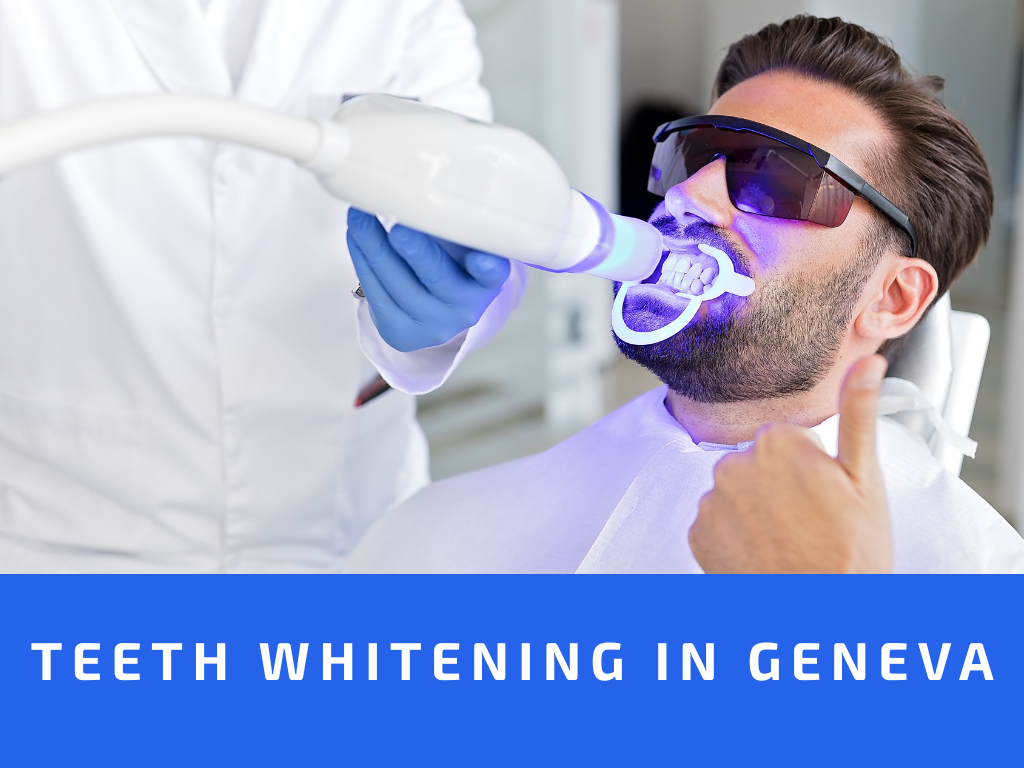
    The most comprehensive option. A concentrated hydrogen peroxide gel (or carbamide peroxide equivalent) is applied directly to the teeth, with the gums and soft tissue protected by a barrier. Many clinics activate the gel using a laser or light source to accelerate the process. A typical session runs 60 to 90 minutes and produces visible results immediately.

    This is the right choice if you want the most dramatic outcome in the shortest time, or if you have a specific event coming up.

    At-Home Whitening with Custom Trays

    Your dentist takes impressions of your teeth and fabricates custom-fitted trays in their laboratory. You then apply a lower-concentration whitening gel at home, wearing the trays for 30 to 45 minutes twice daily (or overnight, depending on the protocol) for 7 to 14 days.

    Results are more gradual but can be equally effective. The custom trays are also reusable: if your dentist provides additional gel in future, you can top up your results without a new appointment.

    Combined Treatment

    Several Geneva clinics offer a hybrid approach: an in-chair session to achieve the initial whitening, followed by a take-home kit to maintain and extend the result. This is typically the most expensive option but gives the longest-lasting outcome.

    Comparison at a Glance

    MethodDurationResults visibleLongevity
    In-chair whitening60-90 minImmediately1-3 years
    At-home custom trays7-14 daysGradually1-2 years (with top-ups)
    Combined (in-chair + trays)1 session + 7-14 daysImmediately, then improved2-3 years
    Pharmacy strips / kitsWeeksMinimalMonths

    Worth noting: Whitening does not affect crowns, veneers, or composite fillings. If you have visible restorations on your front teeth, discuss this with your dentist before treatment. The natural teeth will lighten but the restorations will not, which can create a mismatch in shade.

    How Much Does Teeth Whitening Cost in Geneva?

    This is where Geneva stands apart from other Swiss cities. As a high cost-of-living canton, dental fees in Geneva sit at the upper end of the national range. Based on published rates from Geneva clinics, here is what you can expect to pay.

    Current Price Ranges in Geneva

    TreatmentPrice range (CHF)
    At-home whitening (custom trays + gel)CHF 390 – CHF 600
    In-chair whitening (chairside)CHF 480 – CHF 750
    Combined in-chair + at-home kitCHF 600 – CHF 750
    Single arch whiteningfrom CHF 530
    Hygienist session with express whiteningfrom CHF 240

    The average cost of teeth whitening in Geneva is approximately CHF 512, based on a survey of clinic pricing across the city. At the lower end (around CHF 300), you are typically looking at a shorter session with less predictable results. At CHF 600 and above, you get a longer appointment, higher-grade products, and a more thorough pre-treatment assessment.

    What Drives the Price Difference?

    There are a few factors that explain why one clinic charges CHF 390 and another charges CHF 750 for what appears to be the same treatment:

    • Product concentration: Higher-grade hydrogen peroxide gels cost more and deliver more consistent results
    • Technology used: Laser or LED activation adds to the cost but reduces session time and can improve efficacy
    • Preliminary assessment: Reputable clinics include a full oral health check before whitening; budget providers often skip this
    • Custom trays: Made in-house or in a dental laboratory, these add cost but are reusable and far more effective than generic trays
    • Location: Clinics in central Geneva (Pâquis, Champel, Eaux-Vives) tend to charge more than those in suburban areas like Chêne-Bougeries

    Does Swiss Health Insurance Cover Whitening?

    No. Teeth whitening is classified as an aesthetic treatment in Switzerland and is not covered by the mandatory basic health insurance (LAMal). You pay the full cost out of pocket. Some supplementary dental insurance plans (assurance complémentaire) may contribute a small percentage toward cosmetic treatments, but this varies by insurer and policy. Check your policy documents or contact your insurer directly before booking.

    Practical tip: A preliminary scaling session (CHF 130 to CHF 172 at most Geneva hygienists) is often recommended before whitening. Some clinics include it in the overall price; others charge separately. Confirm this when requesting a quote.

    What to Expect During Treatment

    Regardless of the clinic or method, the process follows a consistent sequence. Knowing what happens at each stage removes any uncertainty before you book.

    Before the Session

    A responsible dentist will not proceed with whitening without a preliminary oral health assessment. This checks for:

    • Untreated cavities (whitening gel can penetrate decay and cause significant sensitivity or pain
    • Gum inflammation or recession
    • Weakened enamel
    • Existing restorations on visible teeth

    If any of these issues are present, they need to be treated first. This is not a upsell; it is clinical protocol.

    During an In-Chair Session

    1. Current shade is recorded using a dental shade guide (for before/after comparison)
    2. Teeth are cleaned to remove surface plaque and tartar
    3. Gums and lips are protected with a barrier or retractor
    4. Whitening gel is applied to the tooth surfaces
    5. Where laser or LED activation is used, the light is applied for the prescribed time
    6. Gel is rinsed off and the final shade is assessed

    The entire process takes approximately 60 to 90 minutes. It is generally painless, though some patients experience mild sensitivity during or after the session.

    After Treatment

    Sensitivity in the 24 to 48 hours following whitening is common and normal. Most dentists recommend:

    • Avoiding staining foods and drinks (coffee, red wine, tomato sauce) for at least 48 hours
    • Using a desensitising toothpaste in the days following treatment
    • Not smoking immediately after treatment

    Results continue to develop slightly in the hours after the session, as the whitening process is still active. The final shade is usually visible within 24 hours.

    Who Is (and Is Not) a Good Candidate for Teeth Whitening?

    Whitening works well for most adults, but it is not universally appropriate. Your dentist will assess suitability at the initial consultation.

    Good candidates include:

    • Adults with healthy gums and no untreated decay
    • Patients with extrinsic staining from diet, tobacco, or coffee
    • Those with age-related yellowing (thinning enamel)
    • Patients with natural teeth (not crowns or veneers on visible surfaces)

    Whitening is not recommended for:

    • Children and adolescents (enamel is still developing)
    • Pregnant or breastfeeding women
    • Patients with severe enamel erosion or dentine hypersensitivity
    • Those with active gum disease or untreated cavities
    • Anyone expecting to whiten crowns, veneers, or composite bonding (these materials do not respond to whitening agents)

    The real question most people avoid asking: how yellow are your teeth, and why? Genetics plays a significant role in natural tooth shade. Some people simply have naturally darker dentine, and whitening can only work within the limits of your enamel. A dentist who promises a specific number of shades without first assessing your baseline is making a claim they cannot guarantee.

    How to Choose a Dentist for Whitening in Geneva

    Geneva has no shortage of clinics offering whitening. The differentiators are less about the treatment itself and more about the clinical rigour around it.

    Look for the following when evaluating a provider:

    • Mandatory pre-treatment assessment: Any clinic willing to whiten without first checking your oral health is cutting corners. This check is non-negotiable.
    • Transparent pricing: A reputable clinic will give you a clear written quote before treatment begins. Watch for clinics that advertise a low entry price and add costs (trays, gel, follow-up) separately.
    • Certified products: In Switzerland, professional whitening products must comply with EU cosmetic regulation limits on hydrogen peroxide concentration (maximum 6% for dental professionals). Ask what product is being used.
    • Aftercare support: Good clinics provide written aftercare instructions and are reachable if you experience unexpected sensitivity.
    • Verified patient reviews: Look beyond the clinic’s own website. Cross-reference reviews on independent platforms.

    Finding a vetted cosmetic dentist in Geneva is straightforward through ConnectaDoc, which lists verified practitioners across Geneva with direct booking links, patient ratings, and specialty filters. You can search specifically for cosmetic dentistry or aesthetic dental care to narrow results to dentists who regularly perform whitening treatments.

    Making Your Results Last

    Professional whitening is not permanent. How long your results last depends almost entirely on your habits after treatment.

    Results typically last 1 to 3 years with proper maintenance. Here is what shortens that window:

    • Daily coffee or tea consumption without rinsing afterwards
    • Smoking or vaping
    • Frequent red wine or dark-coloured foods
    • Skipping regular hygienist appointments (which remove surface staining before it sets)

    The most cost-effective long-term strategy is to schedule a hygienist session every 6 months (CHF 130 to CHF 172 in Geneva) and use your custom trays with a top-up gel once or twice a year. This is significantly cheaper than repeating a full whitening treatment annually.

    Bottom line: The initial CHF 390 to CHF 750 is not a one-off cost if you want to maintain the result. Factor in roughly CHF 130 to CHF 300 per year in maintenance. Over three years, the total investment for a consistently bright smile in Geneva runs CHF 650 to CHF 1,200 depending on your method and habits.

    Ready to Book you Appointment?

    Teeth whitening in Geneva is a well-established, safe, and effective treatment when performed by a qualified dentist. The cost is real, the results are real, and so are the limitations. Going in with accurate expectations makes the difference between a treatment you are happy with and one that disappoints.

    If you are ready to find a cosmetic dentist in Geneva, ConnectaDoc lets you search verified practitioners, compare profiles, and book directly online. No referrals, no waiting on hold.

  • How to Find the Right Dentist in French-Speaking Switzerland

    How to Find the Right Dentist in French-Speaking Switzerland

    Choosing a dentist feels like a small decision until it goes wrong. Then it becomes one of the most important decisions you’ll make for your family’s health.

    I’ve learned this the hard way. Over the years, I’ve changed dentists a few times, mostly because of relocations, and in that process I’ve encountered some genuinely excellent practitioners and some genuinely terrible ones. One dentist made one of my children cry with his complete lack of bedside manner. Another was so rough extracting my mum’s tooth that he traumatised her from seeing any dentist for months afterwards. Both times, the clinics looked fine on the surface.

    The thing about dentists is that once you find a good one, you tend to stay. It’s a long-term relationship; they know your history, they know your mouth, they remember what was done three years ago and what to watch for next. Switching dentists means starting over, and every time I’ve been forced to switch, I’ve been reminded of how much that continuity matters. In fact, after one particularly bad experience with a new dentist closer to home, I ended up travelling back to my old one — a longer drive, but worth every minute.

    This post is everything I wish I’d known before choosing a dentist in Romandie. Whether you’ve just moved here or you’re thinking about switching, here’s what to actually look for.

    Start with the practical stuff

    Before you think about bedside manner or clinical skill, narrow down your options with the basics.

    Location matters. Most people search for the nearest dentist. That makes sense for routine checkups. But if your dentist is someone you trust, you’ll happily drive 20 or 30 minutes past a closer option. I do this now. The convenience of proximity is worth nothing if the dentist is mediocre. That said, location does matter for emergencies and for getting your kids there after school without it becoming a logistical nightmare. My advice: prioritise a 15–20 minute radius, but don’t rule out going further for the right person.

    Opening hours and availability. Can you get an appointment within a reasonable timeframe, or are they booked out for weeks? Do they offer early morning or late afternoon slots for working parents? Some clinics in Lausanne and Geneva are open on Saturdays, which can be a lifesaver. And most importantly, do they handle dental emergencies? Not all clinics do, and you don’t want to find that out at 10pm on a Sunday with a cracked tooth.

    Language. In Romandie, most dentists work in French. If your French is good enough for medical conversations, this is fine. But if you’re an English-speaking expat and you need to understand exactly what’s being done to your teeth (and you should), look for a dentist who speaks good English. Many clinics in the Vaud and Geneva regions have multilingual staff, but it’s worth confirming before you book. Misunderstandings about treatment plans or costs are the last thing you want when someone has a drill in your mouth.

    The things that really matter

    Once you’ve got a shortlist based on logistics, here’s where the real evaluation begins.

    Bedside manner and communication

    This is the number one thing I look for now, and it took some painful lessons to get here.

    A good dentist takes the time to explain what they’re about to do before they do it. They tell you what they’ve found, they walk you through the options, they explain the trade-offs between treatments, and they let you ask questions without making you feel rushed. This is especially important with children. Kids need to feel safe in the chair.

    The dentist who made my daughter cry didn’t bother with any of that. He just started working. My daughter was scared, and instead of pausing to reassure him, the dentist powered through. We never went back. Contrast that with our current dentist, who spends the first few minutes of every kids’ appointment just chatting with them, showing them the tools, making them feel in control. Same profession, completely different experience.

    Attention to detail and thoroughness

    Does the dentist do a comprehensive examination on your first visit, or do they just glance at the obvious problem? A thorough first appointment should include taking your dental history, examining your teeth and gums systematically, and taking X-rays where needed. They should be looking for early signs of gum disease, checking old fillings, and noting things to monitor — not just addressing whatever you came in for.

    A dentist who catches a small issue early saves you thousands later. A dentist who misses things costs you far more than their point value ever will.

    Cleanliness and equipment

    This one sounds obvious, but pay attention to it. When you walk in, does the clinic feel clean and well-maintained? Are the treatment rooms visibly hygienic? Is the equipment modern — digital X-rays, proper sterilisation setup, comfortable chairs? You don’t need to be an expert to notice whether a clinic is investing in its facilities or running on outdated equipment.

    A clinic with modern equipment and up-to-date sterilisation protocols isn’t just more comfortable — it’s safer. If the waiting room looks like it hasn’t been updated since 1995, take that as a signal.

    Cost transparency

    In Switzerland, dentists set their own prices using the DENTOTAR point system. Each treatment is assigned a number of points, and the clinic sets a price per point (the valeur du point) — typically CHF 1.00 to CHF 1.20 in Romandie. This means the same treatment can cost 20% more at one clinic vs another.

    A good dentist is upfront about costs. They provide a written estimate (devis) before any significant work begins. They explain what’s included and what isn’t. They don’t surprise you with add-ons after the fact.

    Comparis has a useful warning about red flags to watch for: rounded prices that don’t reflect the point-based calculation, high upfront payments demanded before treatment, and dentists who push unnecessary treatments. If something feels off, get a second opinion. You’re entitled to one, and any dentist who discourages you from seeking one isn’t worth your trust.

    Billing and admin

    This is a small thing that becomes a big thing when you’re dealing with insurance claims. Does the clinic send your bills promptly? Do they provide clear, itemised invoices that your supplementary insurer can process without questions? Or do they take months to send you a bill, making it impossible to claim on time?

    I’ve experienced both. A well-run clinic sends your invoice within days, clearly broken down by treatment, with the correct codes for your insurer. A badly run one sends you a vague total three months later. When you’re trying to maximise insurance reimbursements or hit the tax deduction threshold in the right calendar year, billing speed and accuracy matter.

    Where to look

    In French-speaking Switzerland, there are several good resources for finding a dentist:

    Word of mouth is still the most reliable. Ask friends, colleagues, neighbours, your GP, or other expat parents. The best dentists I’ve found have all come through personal recommendations.

    The Swiss Dental Association (SSO) has an online directory where you can search for registered dentists by location. Being listed with the SSO means the dentist has a recognised Swiss qualification (or equivalent) and follows the association’s ethical guidelines.

    Comparis offers a medical directory with dentist listings, including information on whether they’re accepting new patients.

    ConnectADoc, and yes, this is the whole reason I built the site. I wanted a place where people in Romandie could find dentists filtered by location, language, and the things that actually matter to expat families. Start your search here.

    My checklist for a first appointment

    Before you commit long-term, treat the first visit as an evaluation of them, not just of your teeth.

    Before you go: Confirm the point value, ask whether they provide written estimates, and check if they speak your preferred language.

    In the waiting room: Is it clean, calm, and reasonably modern? Are the staff welcoming?

    During the appointment: Does the dentist introduce themselves properly? Do they take a full history? Do they explain what they’re doing as they go? Do they show you X-rays and talk you through what they see? Do they present treatment options rather than just telling you what’s going to happen?

    With kids: Do they take extra time? Do they explain things in a child-friendly way? Does your child seem comfortable or scared?

    After the appointment: How quickly does the bill arrive? Is it clear and detailed? Does it match the estimate?

    If the answer to most of these is yes, you’ve probably found your dentist. Hold onto them.

  • Invisalign in Switzerland: Costs, Alternatives, and How to Pay for Straighter Teeth

    Invisalign in Switzerland: Costs, Alternatives, and How to Pay for Straighter Teeth

    Straight teeth are one of those things that feel like they shouldn’t cost as much as a used car. But in Switzerland, orthodontic treatment, whether it’s Invisalign or traditional braces, is a serious financial commitment. And because it’s often classified as cosmetic for adults, you’re usually paying for it yourself.

    I’ve spent time researching this properly, talking to dentists, comparing clinic quotes, and going through the process first-hand with one of my own kids who’s currently on Invisalign, so you don’t have to piece it together from a dozen different sources.

    What Invisalign costs in Switzerland

    Invisalign pricing depends on how complex your case is. The system comes in several tiers, and your orthodontist will recommend the one that matches the amount of tooth movement needed.

    Invisalign Express / Lite — for minor corrections like slight crowding or small gaps. Typically CHF 2,000–3,500. Treatment lasts around 3–6 months.

    Invisalign Comprehensive — the full treatment for moderate to complex cases. This is what most adults end up with. Typically CHF 4,500–9,500, with treatment lasting 6–18 months.

    Invisalign Teen — essentially the same as Comprehensive but with features designed for teenagers, like compliance indicators and replacement aligners for lost trays. Similar pricing to Comprehensive.

    These prices usually include the initial consultation, 3D scanning, all aligner sets, and follow-up appointments. But not always — some clinics charge the consultation separately (CHF 100–200), and retainers at the end of treatment may also be extra (CHF 300–600). Always confirm exactly what’s included in the quote.

    What makes Invisalign different from other aligners

    Invisalign isn’t the only clear aligner on the market anymore. But it remains the most widely used system in Swiss orthodontic practices, and there are real reasons for that.

    25+ years of clinical data. Invisalign has treated over 21 million patients globally. That’s a massive dataset that feeds into their treatment planning algorithms. Newer competitors simply don’t have that volume of clinical evidence behind them.

    SmartTrack material. Invisalign’s proprietary aligner material is designed to apply more consistent, gentle force than standard aligner plastics. It’s also more flexible, which means better comfort and a more precise fit.

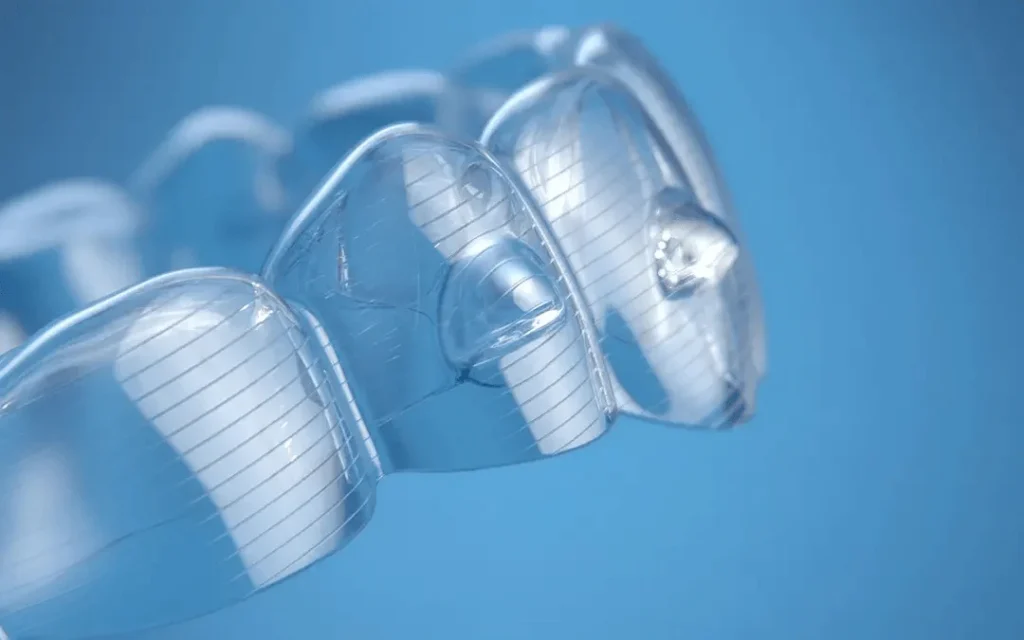
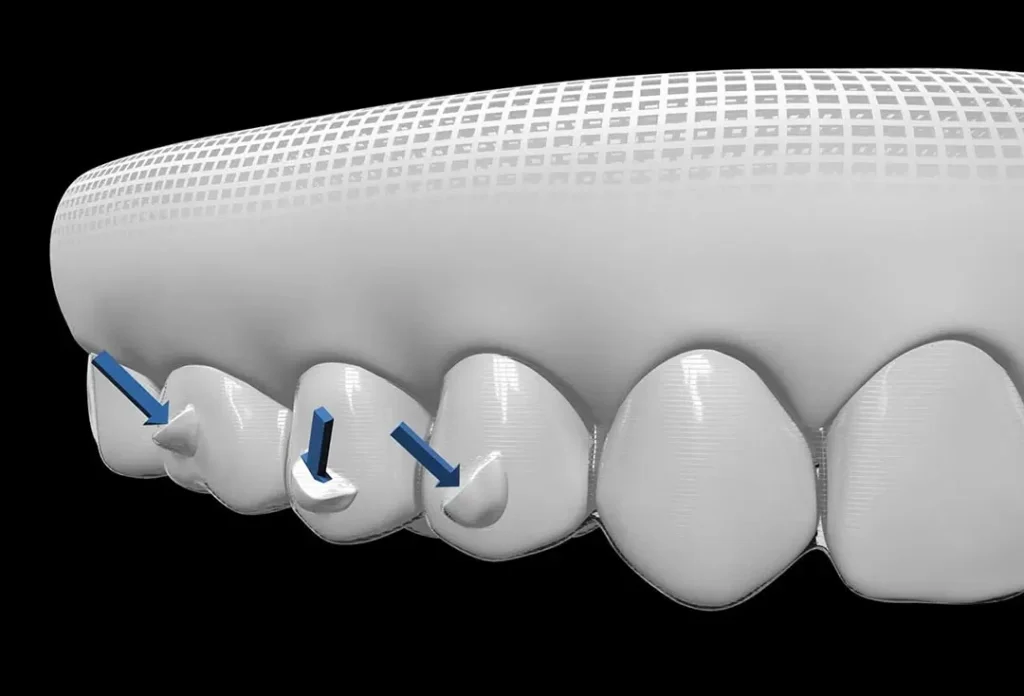
    SmartForce attachments. These are small tooth-coloured bumps bonded to specific teeth that give the aligners something to grip. They enable movements — like rotating a tooth or moving a root — that basic clear aligners can’t achieve reliably. This is the biggest technical differentiator between Invisalign and cheaper alternatives.

    SmartForce attachments

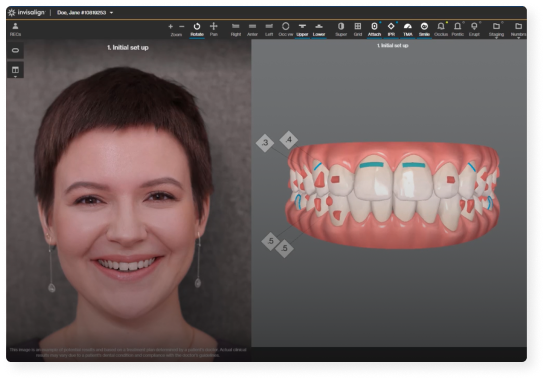
    ClinCheck 3D treatment planning. Before treatment starts, your orthodontist creates a detailed 3D simulation of exactly how your teeth will move at each stage. You can preview your final result before committing. Most competitors offer some version of this now, but Invisalign’s system is the most refined.

    The important caveat: all of this only matters if your treatment is supervised by a qualified orthodontist or experienced dentist. Invisalign is a tool — the skill of the person using it determines the result.

    The alternatives available in Switzerland

    ClearCorrect

    ClearCorrect is the most common in-office alternative to Invisalign in Switzerland. It uses a similar approach: custom clear aligners, 3D planning, regular orthodontist visits, but typically at a lower price point. Expect CHF 3,500–7,000 depending on the complexity. ClearCorrect works well for mild to moderate cases but has less clinical data than Invisalign for complex treatments.

    Spark Aligners

    Spark is a newer entrant that’s gaining traction with Swiss orthodontists. Its aligners are made from TruGEN material, which the company claims is clearer, more stain-resistant, and more comfortable than standard aligner plastics. Pricing is similar to Invisalign. Spark is a solid option if your orthodontist offers it and has experience with the system.

    Traditional metal braces

    Still the gold standard for complex cases. Metal braces can correct severe misalignments, significant bite problems, and rotations that clear aligners struggle with. In Switzerland, traditional braces typically cost CHF 5,000–12,000 for a full treatment. They’re less discreet, but for complex cases, they’re often more effective and sometimes cheaper than Invisalign Comprehensive.

    Ceramic (tooth-coloured) braces

    Same mechanics as metal braces but with tooth-coloured brackets that are less visible. They cost slightly more — CHF 6,000–14,000 — and the brackets can stain if you’re not careful. A reasonable middle ground between visibility and effectiveness.

    Lingual braces

    Fitted to the back of your teeth, making them completely invisible from the front. They’re the most expensive option (CHF 8,000–15,000+), can be uncomfortable initially, and require a specialist to fit them. Available at some Swiss clinics but not widely offered.

    A cautionary note about direct-to-consumer aligners

    You may have seen ads for companies offering clear aligners at a fraction of the cost, sometimes CHF 2,000 or less for a full treatment, often managed remotely with minimal in-person oversight. Some of these have operated in Switzerland.

    The most notable example was Bestsmile, a Swiss startup that offered aligners and veneers at competitive prices. Bestsmile was acquired by Migros in 2022, but closed its locations in early 2025 after failing to meet business targets. Former patients were transferred to zahnarztzentrum.ch and other partner clinics to continue their treatments. The Trustpilot reviews tell a sobering story, many patients reported poor results, premature termination of treatment, and difficulty getting refunds.

    The lesson here isn’t that all affordable aligners are bad. It’s that orthodontic treatment involves moving bones inside your jaw, and that really should be supervised in person by someone with proper training. At-home or remote-only aligner services skip the X-rays, in-person assessments, and ongoing monitoring that catch problems before they become permanent.

    How to pay for Invisalign in Switzerland

    Now the part that matters most: financing.

    Insurance

    Basic insurance (LAMal): Does not cover orthodontic treatment for adults. Period.

    Supplementary dental insurance: This is where there’s potential — but only if you play it right.

    For adults, most supplementary plans classify orthodontics as cosmetic and exclude it. However, if your orthodontist documents a functional reason for treatment — malocclusion causing jaw pain (TMJ dysfunction), uneven tooth wear, or difficulty maintaining oral hygiene due to crowding — some insurers will cover 50–75% up to their annual cap.

    SWICA’s Denta plan covers orthodontics up to age 25 at double the insured amount — so on Category 4, that’s up to CHF 4,000 per year. If you’re under 25 or have kids approaching orthodontic age, this is significant.

    CSS covers orthodontics under Options 3 and 4 (but not Options 1 and 2).

    The critical point: you need to have the insurance in place before the orthodontist diagnoses the problem. Once a treatment plan exists, it’s a pre-existing condition and won’t be covered. Get insured while your teeth are still “officially” fine.

    For children and teens, supplementary dental insurance is almost always worth it for orthodontic coverage. Premiums are low (CHF 10–15/month), and the potential reimbursement for braces or Invisalign can run into thousands. Sign up before age five to avoid the dental exam requirement.

    Clinic payment plans

    Most orthodontic practices in Switzerland offer interest-free instalments. A CHF 6,500 Invisalign Comprehensive treatment spread over 24 months comes to about CHF 270/month. Some clinics offer a discount (5–10%) for upfront payment in full. Always ask — it’s standard practice but not always advertised.

    Tax deductions

    Orthodontic treatment is tax-deductible if your dentist documents a functional (not purely cosmetic) reason. The same rules apply as for other medical expenses: you can deduct the amount exceeding 5% of your net income in most cantons. If you’re combining Invisalign with other dental work in the same year, the total may push you over the threshold. See my full post on tax deductions for the cantonal breakdown.

    Get multiple quotes

    Invisalign pricing varies between clinics more than you’d expect. A Comprehensive treatment quoted at CHF 9,000 at one practice might be CHF 6,000 at another, for the same system, the same aligners, manufactured by the same company. The difference comes down to the clinic’s point value, overhead, and how they price the orthodontist’s time.

    Get at least two quotes. Make sure each one specifies whether the consultation, retainers, and refinement aligners are included.

    How to choose an Invisalign provider

    Not every dentist who offers Invisalign is equally experienced with it. Here’s what to look for:

    Ask about their Invisalign tier. Align Technology (the maker of Invisalign) ranks providers by how many cases they treat annually: Bronze, Silver, Gold, Platinum, Diamond. A higher tier means more experience — and with orthodontics, experience matters.

    Ask to see cases similar to yours. Before-and-after photos of actual patients, ideally with a similar starting position to yours.

    Check whether they’re an orthodontist or a general dentist. Both can offer Invisalign, but an orthodontist has 3+ years of additional specialist training in tooth movement. For complex cases, that expertise is worth paying for.

    Ask about refinements. Sometimes the initial set of aligners doesn’t achieve the full result, and additional aligners (refinements) are needed. Confirm whether refinements are included in your price or charged separately.

    Ready to find an Invisalign provider? Search on ConnectADoc.


    Frequently asked questions

    How much does Invisalign cost in Switzerland? Between CHF 2,000 and CHF 9,500 depending on the complexity of your case. Minor corrections (Invisalign Express/Lite) start from CHF 2,000–3,500. Full treatment (Invisalign Comprehensive) typically costs CHF 4,500–9,500.

    Is Invisalign covered by insurance in Switzerland? Not by basic insurance. Some supplementary dental plans cover orthodontics if the treatment is functionally justified (jaw pain, bite problems, hygiene issues due to crowding). SWICA covers orthodontics up to age 25 at double the insured amount. Get insured before you need it — pre-existing conditions are excluded.

    What is the cheapest alternative to Invisalign in Switzerland? ClearCorrect is the most common lower-cost in-office alternative, typically CHF 3,500–7,000. Traditional metal braces (CHF 5,000–12,000) can also be cheaper than Invisalign Comprehensive for complex cases. Avoid remote-only aligner services without proper in-person supervision.

    Is Invisalign better than braces? For mild to moderate cases, Invisalign offers comparable results with more discretion and comfort. For complex cases: severe crowding, significant bite issues, major rotations, traditional braces may be more effective. Your orthodontist can advise which is best for your specific situation.

    Can adults get Invisalign in Switzerland? Yes, there’s no age limit. Adults make up a significant portion of Invisalign patients. The main consideration for adults is that insurance coverage is much more limited than for children and teens.

    Are Invisalign costs tax-deductible in Switzerland? Yes, if the treatment is documented as medically necessary (not purely cosmetic). The usual cantonal thresholds apply, typically 5% of net income in most cantons. Keep your orthodontist’s treatment justification and all invoices for your tax return.

  • Veneers in Switzerland: What They Cost, What’s Covered, and How to Pay for Them

    Veneers in Switzerland: What They Cost, What’s Covered, and How to Pay for Them

    If you’ve been researching veneers in Switzerland, you’ve probably already noticed two things: they can completely transform your smile, and they’re not cheap. A single ceramic veneer here costs more than a full set would in some countries. And because veneers are almost always classified as cosmetic, you can’t rely on insurance or tax deductions to soften the blow.

    But “not covered by insurance” doesn’t mean “no way to afford it.” There are real options for financing veneers in Switzerland — from clinic payment plans to strategic use of supplementary insurance in specific cases — and knowing about them before your first consultation can save you thousands of francs.

    Here’s everything I’ve learned from helping my friend with the financial side of getting veneers in Switzerland.

    What veneers actually cost in Switzerland

    Let’s start with the numbers. Veneer prices in Switzerland depend on the type, the material, the dental lab, and where the clinic is located. Here are the ranges you’ll see:

    Ceramic (porcelain) veneers — the standard for durability and a natural look — cost between CHF 1,200 and CHF 2,000 per tooth. These are custom-made by a dental technician from an impression or 3D scan, and typically require two to three appointments: preparation, fitting of temporaries, and final bonding. They last 10–20 years with proper care.

    Composite veneers — made from tooth-coloured resin applied directly by the dentist in a single visit — cost between CHF 300 and CHF 600 per tooth. They’re faster and much cheaper, but less durable (5–7 years) and more prone to staining over time.

    Non-prep veneers (Lumineers) — ultra-thin shells that don’t require grinding down your natural teeth — are priced similarly to conventional ceramic veneers, roughly CHF 1,200–1,800 per tooth. The advantage is that the procedure is reversible since no tooth structure is removed.

    For most people considering veneers, the conversation is about the upper front teeth — typically six to eight. So the realistic total cost looks something like this:

    • 6 composite veneers: CHF 1,800–3,600
    • 6 ceramic veneers: CHF 7,200–12,000
    • 8 ceramic veneers (full smile): CHF 9,600–16,000

    Those numbers can feel overwhelming. But before you close this tab, let’s talk about how people actually pay for this.

    Why veneers aren’t covered (and the one exception)

    Basic insurance (LAMal) doesn’t cover veneers. They’re cosmetic. Full stop.

    Most supplementary dental insurance plans don’t cover them either. Veneers are generally excluded from the category of “dental prostheses” (which covers crowns, bridges, and dentures) because they’re considered an aesthetic choice rather than a functional necessity.

    The exception: if a veneer is being placed as an alternative to a crown — say, on a tooth that’s been badly damaged by trauma or decay, and a veneer is the clinically appropriate restoration — some supplementary plans will cover it as prosthetic dental work. This is a conversation to have with both your dentist and your insurer before treatment. Your dentist would need to document why a veneer (rather than a crown) is the right clinical solution for a damaged tooth, and your insurer would need to confirm coverage in writing.

    It’s a narrow exception, and it won’t apply to someone getting veneers purely for a brighter, straighter-looking smile. But if even two or three of your planned veneers fall into this category, it could knock CHF 2,000–4,000 off your total bill.

    Similarly, veneers for purely cosmetic purposes are not tax-deductible. But if your dentist documents a functional reason — such as correcting enamel defects that are causing sensitivity or protecting structurally weakened teeth — the cost may qualify as a deductible medical expense. The 5% net income threshold applies in most cantons (see my post on tax deductions for the full breakdown).

    Five ways to finance veneers in Switzerland

    Here’s where it gets practical. Most people paying CHF 8,000–15,000 for veneers aren’t writing a single cheque. Here’s how it’s actually done:

    1. Interest-free payment plans from your clinic

    This is the most common approach, and the one I’d recommend starting with. Many Swiss dental clinics offer interest-free instalments for treatments over CHF 800. The typical arrangement is 10–24 monthly payments, with no credit check and no interest — the clinic simply splits your total bill into equal chunks.

    For example, a CHF 9,600 treatment (8 ceramic veneers) spread over 24 months comes to CHF 400 per month. Still significant, but much more manageable than a single lump sum.

    Ask about this at your consultation — not all clinics advertise it prominently, but most will offer it if you ask. Some even offer a small discount (5–10%) if you pay the full estimate upfront, so it’s worth asking about that too.

    2. Combine with treatments your insurance does cover

    Smart timing can reduce your effective out-of-pocket cost. If you have supplementary dental insurance, schedule your cleanings, checkups, and any insured treatments (fillings, for example) in the same period as your veneer work. This way, you’re maximising your annual insurance benefit on the treatments that are covered, freeing up more of your own cash for the veneers.

    It won’t directly reduce the veneer cost, but it reduces your total dental spend for the year.

    3. Use the functional angle where it genuinely applies

    As I mentioned above, if any of the teeth you’re veneering are damaged, weakened, or have enamel defects, your dentist may be able to classify those specific veneers as restorative rather than cosmetic. Don’t ask your dentist to fabricate reasons — but do ask them honestly: “Is there a clinical justification for any of these that my insurance might recognise?”

    Even partial coverage on two or three teeth out of eight makes a real financial difference.

    4. Consider composite veneers as a first step

    If the cost of ceramic veneers is simply out of reach right now, composite veneers at CHF 300–600 per tooth are a legitimate option. They won’t last as long and they’re more prone to staining, but they give you the cosmetic result you want at a third of the price.

    Some people use composites as a “trial run” — living with the new smile for a few years before investing in porcelain. It’s not the approach every dentist recommends (some prefer to go straight to the final solution), but it’s a valid financial strategy.

    5. Get multiple quotes

    This is the simplest way to save money, and the one most people skip. Veneer prices vary significantly between clinics — even within the same city. A clinic in central Lausanne might charge CHF 1,800 per veneer while one 20 minutes away charges CHF 1,200 for the same material and lab. The quality may be identical.

    Get at least two or three detailed quotes before committing. Make sure each quote specifies the type of ceramic, which dental lab they use, how many appointments are included, and whether temporary veneers are part of the price.

    What about getting veneers abroad?

    This comes up a lot in expat circles — especially with Turkey and Hungary being aggressively marketed as veneer destinations. The prices are genuinely lower: a ceramic veneer that costs CHF 1,500 in Lausanne might cost CHF 400–600 in Istanbul or Budapest.

    But here are the realities I’d want you to consider:

    Follow-up care is local. Veneers occasionally need adjustments, rebonding, or replacement. If something goes wrong six months after treatment, you’re either flying back or finding a Swiss dentist willing to work on someone else’s veneers, which many won’t.

    Quality is harder to verify. Switzerland has high standards for dental materials and lab work. Abroad, you’re relying on the clinic’s own claims. Some are excellent. Some are not. The due diligence burden falls entirely on you.

    Your Swiss supplementary insurance won’t cover it in most cases. AXA covers treatment in neighbouring countries within 20km of the Swiss border, and Helsana’s DENTAplus is valid worldwide, but most other plans are Switzerland-only.

    The “full mouth in a week” model is risky. Aggressive preparation of many teeth in a short timeframe, with limited follow-up, increases the risk of complications. A Swiss dentist will typically spread the work over several weeks for good reason.

    For a single veneer or a small repair? Dental tourism probably isn’t worth the hassle. For a full smile makeover where the savings are CHF 5,000+? It could make sense — but do your homework, read independent reviews, and factor in the cost of travel and potential follow-up visits.

    How to choose a veneer dentist in Switzerland

    Not every dentist does veneers, and not every dentist who does veneers does them well. This is precision cosmetic work where the difference between “good” and “excellent” is visible every time you smile.

    Here’s what I’d look for:

    Ask to see before-and-after photos of their actual patients — not stock images. Any cosmetic dentist worth their fee will have a portfolio.

    Ask which dental lab they work with. The lab that fabricates your veneers matters as much as the dentist who fits them. Swiss-made ceramics from a reputable lab are generally superior to mass-produced alternatives.

    Ask about the trial smile. Many good cosmetic dentists now create temporary veneers or digital simulations so you can preview the result before committing to the final product. This step is crucial — you should know exactly what your smile will look like before any permanent changes are made.

    Ask about their guarantee. Some clinics offer a warranty on veneer work — typically 2–5 years covering defects in materials or bonding. Not all do, so it’s worth asking.

    And as always — get a written cost estimate (a devis) before any work begins. A good clinic will provide this automatically.

    Ready to start your search? Find a cosmetic dentist on ConnectADoc.

  • Teeth Whitening, Veneers, and Cosmetic Dentistry in Switzerland: Who Pays for What?

    Teeth Whitening, Veneers, and Cosmetic Dentistry in Switzerland: Who Pays for What?

    Let’s get the uncomfortable truth out of the way first: if you want cosmetic dental work done in Switzerland, you’re almost certainly paying for it yourself. No basic insurance. Very little supplementary insurance. And in most cases, no tax deduction either.

    Knowing the rules upfront means you can plan properly, budget realistically, and avoid the nasty surprise of assuming your insurer will pick up part of the tab — only to find out they won’t.

    Here’s the full picture.

    The golden rule: “medically necessary” vs. “cosmetic”

    Everything in Swiss dental insurance hinges on this distinction. If a treatment is considered medically necessary — meaning it’s required to restore function, treat disease, or repair damage — there’s at least a chance that supplementary insurance will cover part of it. If it’s purely cosmetic — meaning it’s about how your teeth look rather than how they work — you’re on your own.

    The problem is that the line between “cosmetic” and “functional” isn’t always obvious. A crown to protect a cracked tooth? That’s functional. Veneers to cover a chipped front tooth that’s also causing you to bite unevenly? That’s a grey area. Teeth whitening because you drink too much coffee? Purely cosmetic.

    Your dentist’s clinical justification matters here. If they can frame a treatment as functionally necessary and document it accordingly, you’ve got a much better shot at getting some coverage. More on this below.

    What cosmetic treatments actually cost

    Here’s what you’re looking at in Switzerland. As always, prices vary by canton, by clinic, and by the complexity of your case — but these ranges are based on real clinic price lists and my own experience.

    Teeth whitening (bleaching)

    This is the most common cosmetic treatment, and the one with the widest price range.

    In-office power bleaching — where the dentist applies a concentrated whitening gel, sometimes activated by a light — typically costs between CHF 300 and CHF 650 for a single session of 60–90 minutes. Some clinics in Geneva and Zurich charge up to CHF 800 for premium treatments.

    Home bleaching kits provided by your dentist — where you get custom-fitted trays and professional-grade gel to use at home over 1–2 weeks — run between CHF 280 and CHF 500.

    Many clinics offer combination packages (professional cleaning plus whitening) for CHF 400–600, which is often the best value since you need clean teeth before bleaching anyway.

    Results typically last one to two years depending on your diet and habits.

    Veneers

    Veneers are thin ceramic shells bonded to the front of your teeth. They’re the big-ticket cosmetic item — and the prices reflect it.

    A single ceramic veneer in Switzerland costs between CHF 1,200 and CHF 2,000. The variation depends on the type of ceramic (monochrome vs. multi-layered, custom-crafted), the lab that makes them, and how many you’re getting done. Clinics often offer a lower per-tooth price when you’re doing a full set.

    Most veneer treatments require two to three appointments over a couple of weeks: preparation and impression, then fitting. Some clinics offer same-day options using digital scanning and in-house milling.

    If you’re doing a “smile makeover” — say, six to eight upper front teeth — you’re looking at CHF 7,000–16,000. It’s a significant investment, and it’s worth getting consultations from two or three different clinics before committing.

    Invisalign and clear aligners

    Invisalign pricing in Switzerland depends heavily on the complexity of your case. For minor tooth movements (Invisalign Express or Lite), treatment can start from around CHF 2,000–3,500. A full Invisalign Comprehensive treatment for adults typically runs CHF 4,500–9,500, with treatment lasting six months to two years.

    Many clinics offer interest-free payment plans — spreading the cost over 10–24 monthly instalments is common.

    Here’s where it gets interesting from an insurance perspective: aligners sit in that grey zone between cosmetic and functional. If your misalignment is causing jaw pain, uneven wear, or difficulty cleaning between crowded teeth, a good dentist can make a case that orthodontic treatment is medically justified, not purely cosmetic. That distinction could unlock partial coverage from your supplementary insurance.

    Composite bonding

    This is the budget-friendly cosmetic option that many people don’t know about. Your dentist applies tooth-coloured resin to reshape a tooth, close a small gap, or repair a chip. It’s done in a single visit, and it typically costs CHF 200–500 per tooth — far less than a veneer. The trade-off is that bonding doesn’t last as long (5–7 years vs. 10–20 for veneers) and isn’t as resistant to staining.

    Who pays for what: the insurance breakdown

    Let me be direct about each category.

    Basic insurance (LAMal): Covers nothing cosmetic. Not whitening, not veneers, not aligners for aesthetic purposes. The only time basic insurance touches dental work is for severe jaw disease, serious systemic illness, or accidents — and none of those are cosmetic situations.

    Supplementary dental insurance: This is where there’s a sliver of hope, but it depends on both the insurer and the treatment.

    AXA stands out here. Their dental insurance explicitly covers bleaching and dental hygiene, and those benefits kick in immediately with no waiting period. Most other insurers do not cover whitening at all.

    For Invisalign and orthodontics, some supplementary plans will cover a portion — typically 50–75% up to an annual cap — but only if the treatment can be justified on functional grounds. SWICA’s Denta plan, for example, covers orthodontics up to age 25 at double the insured sum. CSS covers orthodontics under some options but not all. You’ll need to check your specific plan and, ideally, get pre-approval from your insurer before starting treatment.

    For veneers, coverage is rare. Supplementary insurance typically covers “dental prostheses” — crowns, bridges, dentures — but veneers are usually classified as cosmetic and excluded. The exception might be if a veneer is replacing a damaged tooth where a crown would be the alternative treatment.

    Tax deductions: Cosmetic dental work is not tax-deductible. The Swiss tax authorities are clear on this — only treatments that serve a medical purpose qualify. Whitening, veneers for purely aesthetic reasons, and elective orthodontics for appearance don’t count. However, if your dentist has documented a functional reason for the treatment (jaw pain, bite issues, difficulty cleaning), you may be able to deduct the cost as a medical expense. Keep the dentist’s written justification alongside your receipts.

    The grey area: when “cosmetic” becomes “functional”

    This is the most important section of this post, because it’s where real money can be saved or lost.

    Many treatments that seem cosmetic actually have a legitimate functional component. Misaligned teeth don’t just look crooked — they create hard-to-clean areas that lead to cavities and gum disease. A bite that doesn’t meet properly causes jaw pain, headaches, and uneven wear. Discoloured teeth can sometimes indicate underlying enamel issues.

    The key is how your dentist documents the treatment. If the documentation says “patient requests whiter teeth,” that’s cosmetic. If it says “orthodontic correction indicated due to malocclusion causing temporomandibular joint dysfunction and accelerated wear on teeth 14 and 24,” that’s functional — even if the patient’s primary motivation was a straighter smile.

    I’m not suggesting you get your dentist to fabricate reasons. I’m saying that if there’s a genuine functional component to your treatment — and there often is — make sure your dentist documents it properly. It can make the difference between getting 75% coverage and getting nothing.

    A good cosmetic dentist will know how to navigate this. It’s worth asking during your consultation: “Is there a functional basis for this treatment that my insurance might cover?”

    My honest advice

    Cosmetic dentistry in Switzerland is expensive, and it’s mostly out-of-pocket. That’s the reality. But here are a few ways to make it less painful:

    Get multiple quotes. Prices for the same treatment can vary by 40–50% between clinics. A veneer that costs CHF 2,000 at one practice might be CHF 1,200 at another — and the quality may be identical. Don’t assume the most expensive clinic is the best.

    Ask about payment plans. Most Swiss dental clinics offer interest-free instalments for treatments over CHF 800. Spreading the cost over 10–24 months can make even a full set of veneers manageable.

    Combine treatments strategically. If you’re doing whitening, do it alongside your regular cleaning — many clinics offer discounted packages for this combination.

    Check your supplementary insurance before you start. If there’s any chance of coverage, get written confirmation from your insurer before beginning treatment. Retroactive claims for cosmetic work are almost always rejected.

    Consider whether the “cosmetic” treatment has a functional angle. Talk to your dentist honestly about this. You might be entitled to partial coverage you didn’t know about.

    And whatever you do, find a dentist who specialises in the type of cosmetic work you want. A general dentist can do a filling beautifully but may not have the same skill set for veneers or complex whitening. This is one area where specialisation really matters.

    Looking for a cosmetic dentist? Start your search on ConnectADoc.

    Frequently asked questions

    Is teeth whitening covered by Swiss insurance? Not by basic insurance (LAMal), and not by most supplementary dental plans either. The notable exception is AXA, whose dental insurance explicitly covers bleaching with no waiting period. If you have another insurer, check your specific plan — but expect to pay out of pocket.

    Are veneers covered by dental insurance in Switzerland? Almost never. Veneers are classified as cosmetic by most insurers and are excluded from coverage. The one exception is if a veneer is being used as an alternative to a crown on a damaged tooth — in that case, some supplementary plans may cover part of the cost as “dental prosthesis” work. Get written confirmation from your insurer before proceeding.

    Does supplementary dental insurance cover Invisalign in Switzerland? It depends on why you’re getting it. If the treatment is purely for aesthetics (straighter smile), most insurers won’t cover it. But if your dentist documents a functional reason — malocclusion causing jaw pain, uneven wear, or difficulty maintaining hygiene — some supplementary plans will reimburse 50–75% up to their annual cap. SWICA covers orthodontics up to age 25 at double the insured amount. Always get pre-approval.

    Are cosmetic dental treatments tax-deductible in Switzerland? Purely cosmetic work — whitening, veneers for appearance, elective orthodontics — is not tax-deductible. However, if your dentist documents a medical or functional justification for the treatment (jaw dysfunction, bite correction, prevention of further dental damage), you may be able to deduct the cost as a medical expense. The usual cantonal thresholds apply (5% of net income in most cantons).

    How much do veneers cost in Switzerland? A single ceramic veneer typically costs between CHF 1,200 and CHF 2,000, depending on the type of ceramic, the dental lab, and the clinic. For a full smile makeover (six to eight teeth), expect CHF 7,000–16,000. Prices vary significantly between clinics, so getting two or three quotes is always worthwhile.

    How much does teeth whitening cost in Switzerland? Professional in-office whitening runs CHF 300–800 per session. Home bleaching kits from your dentist cost CHF 280–500. Many clinics offer combination packages (cleaning plus whitening) for CHF 400–600. Results last one to two years with good care.

  • Supplementary Dental Insurance in Switzerland: Is It Actually Worth the Money?

    Supplementary Dental Insurance in Switzerland: Is It Actually Worth the Money?

    In my first post, I talked about my experience of moving to Switzerland and having to navigate the complexities of Swiss health insurance and coverage when it comes to your your teeth. The natural follow-up question — and one I get asked constantly by friends and colleagues who’ve just moved here is: “So should I get supplementary dental insurance?”

    The honest answer? It depends. And I mean that genuinely, not in a cop-out way. I’ve run the numbers for my own family, and the maths work differently depending on whether you’re a healthy single adult, a couple, or a family with kids. Let me walk you through it the way I wish someone had walked me through it when I first arrived in Vaud.

    How supplementary dental insurance works in Switzerland

    First, the basics. Supplementary dental insurance is a private, voluntary add-on that you buy separately from your basic health insurance (LAMal). The major insurers — SWICA, CSS, AXA, Helsana, Sanitas, Concordia — all offer their own versions, and the plans vary quite a bit. But they all follow the same basic structure:

    You pay a monthly premium. This ranges from roughly CHF 20 to CHF 80 per month for adults, depending on the insurer, the level of coverage you choose, and your age. Older applicants pay more.

    The insurer reimburses a percentage of your dental bills. Typically 50% or 75%, depending on the plan.

    There’s an annual cap. The maximum the insurer will pay out per year, usually somewhere between CHF 1,000 and CHF 5,000.

    There are waiting periods. Most plans won’t cover anything for the first six months. For dentures, crowns, and bridges, it’s often 12 months. For orthodontics, it can be up to 24 months. So if you sign up today because you need a crown next week — sorry, that’s not how it works.

    You need a dental exam to apply. Almost every insurer requires a clean bill of dental health before they’ll accept you. Pre-existing conditions — cavities, gum disease, teeth that already need work — will be excluded from your coverage, or your application will be rejected entirely. This is the single biggest catch, and the reason timing matters so much.

    The real plans, compared

    Rather than talk in generalities, let me lay out what the main insurers actually offer. These are the standalone dental plans — some insurers also include dental benefits in their broader supplementary packages (like SWICA’s Completa Top/Forte), but I’m focusing on the dedicated dental products here.

    SWICA Denta offers four tiers. Category 1 covers 50% up to CHF 500 per year. Category 2 covers 50% up to CHF 1,000. Category 3 covers 75% up to CHF 1,500. And Category 4 — the top tier — covers 75% up to CHF 2,000 per year. The standout feature for parents: SWICA pays double the insured amount for orthodontic work up to age 25. So on Category 4, your kid could get up to CHF 4,000 per year towards braces. That’s significant.

    CSS Dental also has four options. Option 1 reimburses 50% up to CHF 1,000. Option 2 is 75% up to CHF 2,000 (but excludes orthodontics). Option 3 is 75% up to CHF 3,000. And Option 4 is 75% up to CHF 5,000, though it comes with a CHF 500 retention fee. CSS has a six-month waiting period for general treatment and 12 months for prosthetic work like crowns and bridges. One nice touch: children under 3 don’t need a dental certificate to apply.

    AXA Dental covers between 50% and 75% of costs depending on the option, with a maximum of CHF 3,000 per year. AXA is one of the few insurers that explicitly covers bleaching (teeth whitening) and dental hygiene without a waiting period — those are available from day one. Children under five don’t need a dental exam, which is the same threshold most other insurers use. AXA also covers treatment in neighbouring countries within 20km of the Swiss border, which is worth knowing if you live near France or Germany.

    Helsana DENTAplus is interesting because it offers a “Light” option that doesn’t require a dental exam or report, though the coverage is more limited. The standard plans have a six-month waiting period. Helsana also offers a 5% family discount for two insured family members on the same contract, or 10% for three or more.

    Let’s do the maths: three scenarios

    This is where it gets real. I’m going to walk through three common situations and calculate whether insurance makes financial sense in each one.

    Scenario 1: Healthy adult, no major issues expected

    Profile: You’re 35, your teeth are in good shape, and you go for a checkup and cleaning twice a year. No crowns, no fillings, no emergencies.

    Annual dental spend without insurance: Two checkups (CHF 150 each) plus two cleanings (CHF 200 each) = roughly CHF 700 per year.

    With a mid-tier plan (say, 75% reimbursement up to CHF 2,000): You’d get back around CHF 525. But you’re paying maybe CHF 45–55/month in premiums — that’s CHF 540–660 per year.

    The verdict: You’re roughly breaking even, or possibly losing a small amount. Supplementary dental insurance for a healthy adult with no expected issues is, honestly, marginal. You’re essentially pre-paying for your own cleanings with a small admin fee on top.

    But here’s the real question: What happens when something unexpected comes up? One cracked tooth, one root canal, one crown — and suddenly you’re looking at CHF 1,500–3,000 in a single visit. If that happens in year three of your policy, the insurance has more than paid for itself. If it never happens, you’ve spent money you didn’t need to.

    It’s insurance in the truest sense of the word — you’re paying for peace of mind, not guaranteed savings.

    Scenario 2: Adult with a history of dental work

    Profile: You’re 40, you’ve had fillings, maybe a crown, and your dentist has mentioned that a couple of your older fillings may need replacing in the next few years. Perhaps, like me, you arrived in Switzerland with dental work from another country that a Swiss dentist looked at and said “we should redo that.”

    This is where it gets tricky. If you already have known issues when you apply, the insurer will either exclude those specific teeth or reject your application. So the insurance won’t help with the work you already know about.

    The verdict: If you’re in this situation, you’ve probably missed the ideal window. The time to get dental insurance is when your teeth are still healthy — not when you already need work. That said, it may still be worth applying for future coverage, provided you’re upfront in the application. Just don’t expect it to cover the work your dentist has already flagged.

    Scenario 3: Family with kids

    Profile: You’ve got two kids, ages 4 and 7. The older one is already showing signs of needing braces. The younger one has healthy teeth but you know orthodontics runs in the family.

    Potential orthodontic costs without insurance: CHF 8,000–12,000 per child for braces. That’s CHF 16,000–24,000 for two kids.

    With SWICA Denta Category 4: You pay roughly CHF 10–15/month per child in premiums. That’s CHF 120–180 per child per year. Over the course of a 4–5 year orthodontic treatment, you’d pay maybe CHF 600–900 in total premiums per child. In return, SWICA would reimburse up to CHF 4,000 per year per child towards orthodontics.

    The verdict: For kids, supplementary dental insurance is almost a no-brainer — especially if orthodontics is even a remote possibility. The premiums are low, the potential payouts are high, and the maths genuinely work. The only caveat is the waiting period (up to 24 months for orthodontics) and the requirement that you sign up before age five if you want to avoid the dental exam. This is why every parent I know who’s been through this says the same thing: get it early.

    My own experience? I took out dental insurance for both my kids shortly after we arrived. Both have needed significant dental work. The insurance has comfortably paid for itself many times over.

    The five things nobody tells you

    Beyond the numbers, there are some practical realities about supplementary dental insurance that don’t appear in the brochures:

    1. You can’t just switch plans when you need more coverage. If you’re on a basic tier and suddenly need a crown, you can’t upgrade to the top tier and immediately claim. Upgrades typically come with new waiting periods for the additional coverage.

    2. Coverage is usually based on the Swiss Dental Association’s recommended tariff, not what your dentist actually charges.If your dentist’s prices are above the Swiss Dental Association’s recommended rates, the insurer may reimburse based on the lower amount. You’ll still pay the difference.


    3. The dental exam is the gatekeeper. I can’t stress this enough. If you wait until you have a problem, it’s too late. The best time to apply is when you’ve just had a cleaning and your teeth are in perfect shape.

    4. Some broader supplementary insurance packages include dental. SWICA’s Completa Top, for instance, includes CHF 100 per year towards dental treatment even without the separate Denta plan. It’s not much, but if you already have supplementary insurance, check whether there’s a dental component built in.

    5. You can combine plans. CSS, for example, lets you stack their Dental Insurance with their myFlex Outpatient Insurance. Together, they can cover up to 100% of your dental bills. It costs more, but for someone who knows they’ll have ongoing dental needs, it can make sense.

    My honest take

    Here’s what I’d tell a friend who asked me this question:

    If you’re a healthy single adult and you’re disciplined about saving, you could skip the insurance and put CHF 50/month into a dedicated “teeth fund” instead. You’ll come out ahead in most years, and you’ll have the cash available when something goes wrong. The downside is that a single bad year — an implant, a crown, a root canal — could cost you CHF 5,000+, and that stings a lot more when it’s all in one hit.

    If you’ve just arrived in Switzerland and your teeth are in good shape, sign up now. Seriously. Even a basic tier. You’ll pass the dental exam, you’ll lock in coverage with no exclusions, and you’ll be grateful in three years when something unexpected happens. The window closes fast once you start needing work.

    If you have kids, this isn’t even a debate. Get supplementary dental insurance for them before they turn five. The orthodontics coverage alone justifies the cost several times over.

    If you already have dental issues, it may be too late for the problems you know about, but it’s still worth considering for future protection. Talk to the insurer honestly about your situation before you go through the dental exam process.

    And whatever you decide — get a good dentist first. Insurance or not, the right dentist can save you money by catching things early and being upfront about costs. That’s the whole reason I built ConnectADoc.

  • I Moved to Switzerland and Got 3 Different Answers About Dental — Here’s What I Learnt

    I Moved to Switzerland and Got 3 Different Answers About Dental — Here’s What I Learnt

    Before I moved from the UK to the canton of Vaud with my family, I did what everyone does — I called friends who already lived in the region and asked for advice. When the topic of health insurance came up, dental care naturally followed.

    One friend told me not to bother with dental coverage in Switzerland at all. “Just find a dentist across the border in France,” he said. “It’s way cheaper.” (I’m glad I didn’t follow that advice. Finding a dentist in France is genuinely difficult right now — there’s a massive shortage, waiting lists are months long, and if you don’t speak fluent French you’re going to have a bad time.) Another friend had no idea how any of it worked because they were covered through a UN organisation — the kind of expat who’s never had to think about Swiss insurance at all.

    Back in the UK, dental was part of the system — not perfect, not always easy to get an appointment, but a checkup cost about £27 and even a crown was capped at around £320.

    I figured Switzerland, with its famously excellent healthcare, would be at least as good. I signed up for basic health insurance, added supplementary dental coverage for the family (thankfully ignoring the ‘just go to France’ advice), and booked my first routine checkup here in Vaud. Nice clinic, friendly dentist, quick clean, two X-rays. In and out in 40 minutes.

    Then the bill arrived.

    CHF 350.

    For a checkup.

    I called my health insurer to ask about reimbursement. And that’s when I heard the sentence that every expat in Switzerland eventually hears:

    “Dental care is not covered under basic health insurance.”

    I’m sorry, what?

    The thing nobody tells you when you move here

    Here’s the deal, and I wish someone had sat me down and explained this on day one: Switzerland has one of the best healthcare systems in the world. It also has one of the most expensive dental care systems in the world. And the two have almost nothing to do with each other.

    Your mandatory basic health insurance — LAMal (l’assurance-maladie) — covers doctor visits, hospital stays, prescriptions, maternity care, and a long list of medical treatments. What it does not cover is pretty much anything to do with your teeth.

    No checkups. No cleanings. No fillings. No crowns. No braces for your kids. Nothing.

    There are exactly three exceptions where basic insurance will pay for dental work:

    1. Severe, unavoidable diseases of the jaw or masticatory system — we’re talking rare, serious conditions, not your average cavity.
    2. Dental problems caused by a serious general illness — for example, if you’re undergoing chemotherapy and it affects your teeth.
    3. Accidents — but only if the damage isn’t already covered by your employer’s accident insurance (UVG), which it usually is if you work more than eight hours a week.

    So unless you’ve got a genuinely unusual medical situation, your basic insurance will pay precisely zero towards your dental care. Every checkup, every filling, every cleaning — it’s all coming out of your pocket.

    So what does dental care actually cost in Switzerland?

    Let me give you the numbers I’ve gathered over the years, both from my own bills and from talking to other expats and Swiss friends. These are rough ranges — prices vary by canton, by dentist, and by the complexity of your case — but they’ll give you an idea of what to expect:

    Routine stuff:

    • Dental checkup (with X-rays): CHF 130–300
    • Dental hygiene / professional cleaning: CHF 150–250
    • Simple filling: CHF 200–400

    The bigger bills:

    • Root canal treatment: CHF 800–2,000
    • Ceramic crown: CHF 1,500–3,000
    • Dental implant (including the crown on top): CHF 3,000–6,000

    Kids’ orthodontics:

    • Braces: CHF 5,000–15,000
    • Invisalign / clear aligners: CHF 4,000–9,000

    Cosmetic:

    • Professional teeth whitening: CHF 300–800
    • Veneers: CHF 800–2,000 per tooth

    Now, I should explain why prices vary so much. Unlike doctors, who bill according to a regulated tariff (TARMED), Swiss dentists set their own prices. They use a point-based system called DENTOTAR, where each treatment is assigned a certain number of points, and each clinic sets its own “point value” — typically somewhere between CHF 1.00 and CHF 1.20 per point. A clinic in central Zurich might charge CHF 1.20 per point while one in a smaller town charges CHF 1.00. Over the course of a treatment, that 20% difference adds up fast.

    The practical takeaway? Always ask for a written cost estimate — a devis — before agreeing to any treatment beyond a basic checkup. A good dentist will offer this without you having to ask. And if the number makes you wince, you are absolutely within your rights to get a second opinion.

    The supplementary insurance question

    Once the reality of Swiss dental costs sinks in, the next thought most people have is: “OK, so I need dental insurance.”

    It’s not that simple. But in my case, I’m very glad I went for it.

    Switzerland offers supplementary dental insurance from providers like Mutuel Assurance, SWICA, CSS, Concordia, and AXA. But it works very differently from what you might expect:

    The good: These plans typically reimburse 50–75% of your dental costs, with annual limits ranging from CHF 1,000 to CHF 5,000 depending on what you pay.

    The catch: There are waiting periods. Most plans won’t cover anything for the first 6–12 months after you sign up. For orthodontics, it can be up to 24 months. And here’s the part that really stings — before they’ll accept you, most insurers require a dental exam. If you’ve got any existing issues — a cavity, a cracked tooth, gum disease — those will be excluded from your coverage. Some insurers will reject your application outright.

    The maths: Premiums run anywhere from CHF 20 to CHF 80 per month for adults. Over a year, that’s CHF 240–960. If your annual limit is CHF 1,000 and the insurer covers 75%, you’re getting back a maximum of CHF 1,000 — but you’ve paid, say, CHF 600 in premiums. The net benefit is slim unless you have a bad year.

    For kids, the equation is different. Premiums are much lower — from around CHF 10 per month — and the orthodontics coverage alone can save you thousands. SWICA, for instance, pays double the insured sum for orthodontic work up to age 25. If there’s one piece of advice I’d give to any parent arriving in Switzerland, it’s this: get supplementary dental insurance for your children immediately, ideally before they turn five. After that age, insurers will require a dental exam and may exclude orthodontic coverage if they spot early signs of misalignment.

    I’ll go much deeper into whether supplementary dental insurance is worth it in a dedicated post — including a proper cost-benefit breakdown for different scenarios. For now, just know that the option exists, the window to get it is narrower than you’d think, and timing matters.

    What about accident insurance?

    Here’s a small silver lining that a lot of people overlook. If you’re employed in Switzerland, your employer is required to provide accident insurance (UVG). If you work more than eight hours per week, that insurance covers you for accidents both at work and outside of work.

    So if you chip a tooth playing football, or take a fall on the ice and damage your front teeth — that’s covered by your accident insurance, not your health insurance. And importantly, it doesn’t matter whether the accident happens on a weekday or a Sunday at 2am.

    The key word is “accident” — meaning something sudden, unexpected, and caused by an external force. A cavity that’s been slowly developing for months? Not an accident. A tooth that breaks while you’re eating a piece of bread because it was already weakened? That’s a grey area, and insurers may push back.

    But genuine accidents — absolutely file a claim. I’ve seen too many expats pay out of pocket for dental emergencies without realising their employer’s UVG coverage applies.

    The tax deduction most people miss

    Here’s something I didn’t discover until my third year in Switzerland, and I genuinely wish someone had told me sooner: you can deduct out-of-pocket dental costs from your taxes.

    In the canton of Vaud — and in most Swiss cantons — self-paid medical expenses (including dental) that aren’t reimbursed by any insurance are tax-deductible. The catch is that you can only deduct the amount that exceeds 5% of your net income.

    So if your net income is CHF 80,000, the first CHF 4,000 of medical expenses doesn’t count. But if your family’s dental bills for the year come to CHF 6,000, you can deduct CHF 2,000 from your taxable income. That’s not life-changing money, but it’s not nothing either — especially in a year where someone in the family needs a crown or an implant.

    The practical tips:

    • Keep every single dental receipt. Every checkup, every cleaning, every tube of prescribed fluoride toothpaste.
    • Request your annual tax statement from your health insurer — it lists all premiums and costs, which makes the tax return much easier.
    • Time bigger treatments strategically. If you know you need a crown and your partner needs a filling, try to schedule both in the same calendar year so you’ve got a better chance of clearing that 5% threshold.

    Some cantons are more generous than others — in Geneva, the threshold is just 0.5% of net income, and in Basel-Landschaft there’s no threshold at all. I’ll write a full post on the tax angle, because it deserves its own deep dive.

    What I’d tell a friend who’s about to move here

    I got some things right — taking out supplementary dental insurance early was one of them, and it’s saved us thousands with two kids who both needed significant work. But I also got plenty wrong, and I spent years figuring things out that someone could have explained to me in ten minutes.

    So here’s the checklist I wish I’d had:

    Within your first three months:

    • Understand that dental is NOT part of basic insurance. Budget separately for it.
    • Sign up for supplementary dental insurance while your teeth are still healthy. Wait until you need work done and it’ll be too late — insurers require a dental exam and will exclude anything pre-existing.
    • Get supplementary dental insurance for your kids immediately. Don’t wait until they’re five.
    • If you’ve had dental work done in the UK (or elsewhere), be prepared for the possibility that a Swiss dentist may want to redo some of it. It’s not a scam — the standards really are different.

    When choosing a dentist:

    • Ask what their point value is (the rate per point that determines how much you pay — it varies between clinics and it’s the single biggest driver of your bill).
    • Always request a cost estimate before treatment.
    • Don’t assume the nearest dentist is the right dentist. Shop around.
    • And please, don’t just “go to France” because someone told you it’s cheaper. It might be, if you can actually find a dentist with availability. That’s a big if.

    Every year:

    • Keep all dental receipts in one folder. You’ll thank yourself at tax time.
    • Book a cleaning every six months. Prevention is genuinely cheaper than treatment here.
    • Review whether your supplementary insurance still makes sense, or whether the maths has changed.

    Why I built ConnectADoc

    I built ConnectADoc because navigating all of this shouldn’t be this hard. Finding the right dentist in Switzerland — one who speaks your language, charges fairly, and actually has availability — shouldn’t require calling three friends and getting three completely different (and mostly wrong) answers.

    I’m not a dentist. I’m not an insurance broker. I’m a British guy in Vaud with my wife and two kids, a drawer full of dental receipts, and several years of figuring this out the hard way — so you don’t have to.

    This is the first post in a series where I’ll break down everything I’ve learned about managing dental costs in Switzerland. Coming up next:

    • Is supplementary dental insurance actually worth the money? A proper cost-benefit analysis with real numbers.
    • How to deduct dental costs from your Swiss taxes — the canton-by-canton breakdown.
    • The cross-border dental hack — when going to Germany or France for treatment makes sense (and when it doesn’t).
    • Kids’ dental care in Switzerland — what’s free, what’s not, and how to avoid a five-figure orthodontics bill.

    If any of this resonated, or if you’ve got your own Swiss dental horror story, I’d love to hear it. And if you’re looking for a dentist right now — start here.